Kokufu Bonsai Ten, Part I
("National Bonsai Exhibition")
 |
|
Koku
Fu Bon
Sai Ten |
Compiled by Robert J. Baran, with William N. Valavanis
This Page Last Updated: October 17, 2026
|
This now eight-day February national exhibit of bonsai is the largest and most prestigious of all bonsai shows
worldwide. The Nippon Bonsai Association
(NBA), the official sponsor of the event, has worked diligently over many years to insure that only the finest bonsai
in Japan are displayed in the Tokyo Metropolitan Art Museum in Ueno Park, Tokyo. To win one of the several
prizes or sho awarded greatly enhances the career of the stylist and honors the owner of the outstanding
tree. In a given year there may be anywhere from one to five of the prizes awarded. However, the
Kokufu-sho is not given if there is not a worthy tree. Once a tree does win the prize, it is never
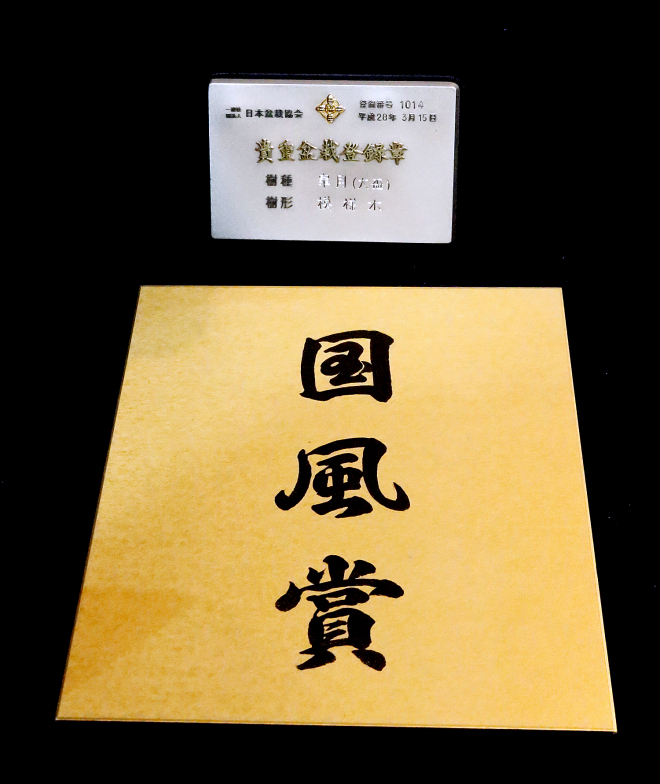
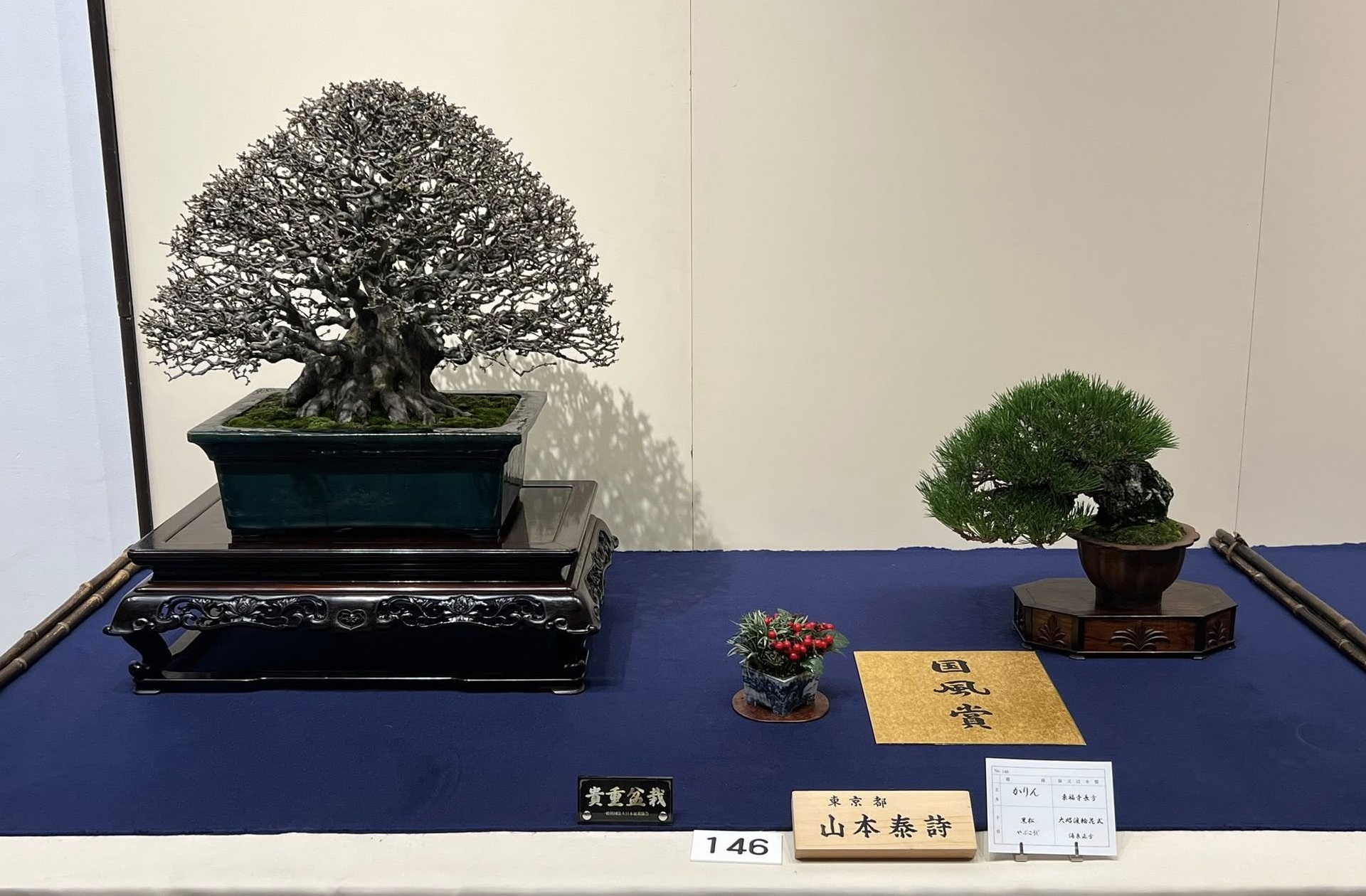
again eligible for another Kokufu-sho but it still can be entered additional times for display only. The Kokufu-sho is a "trophy" as a simple shikishi board, used for paintings. It is gold-colored with kanji characters which read "Kokufu Prize." A monetary prize is not attached, but there is a certificate which often can then be hung in the owner's home. The shikishi board is often displayed with the bonsai when exhibited in other shows. It is common for the top Kokufu Prize bonsai from the February exhibition to be displayed along with the board at the Taikan exhibition the following November. (The Taikan Ten is the "Grand View Exhibit" held in Kyoto. This outstanding, four-day national exhibit of bonsai is the largest and best of the late season shows, first held in 1981. This is another of the exhibits that is held for hobbyists, although many of the better trees have been styled and maintained by bonsai professionals. The Meifu-ten, held in Nagoya in January, is the second oldest and third largest exhibition in Japan.) The Kokufu Ten is set up on Friday and Saturday. The awards are given to the bonsai after the show is set up a few days before the opening, without ceremony. The show does not open until Tuesday. The Kokufu Bonsai Exhibition is organized and run by the Nippon Bonsai Association, but sponsored by the City of Tokyo, Ministry of Education and NHK TV. |
| |||||||
|
The small silver plaque on top is designated for an Important Bonsai Masterpiece. The lower gold plaque is for
the Kokufu Prize. Important Bonsai Masterpieces or kicho
bonsai have been designated by the Nippon Bonsai Association as special masterpieces because they have been recognized
as being "cultural assets of the entire nation," such as those with unique forms and species, those that are
academically valuable, those that have legends and traditions, and those that have high value in Japanese history.
Once a year, new trees are entered for evaluation by the owners of the bonsai. The system for registering
kicho bonsai was established in 1980 by the NBA and to date there have been approximately 2,000 bonsai registered.
They can be identified by small metal tags hanging on a branch or a silver colored metal plaque. These are often
displayed on or next to a bonsai when on display. These trees are automatically accepted for display in the Kokufu
Bonsai Exhibition.
|
|
|
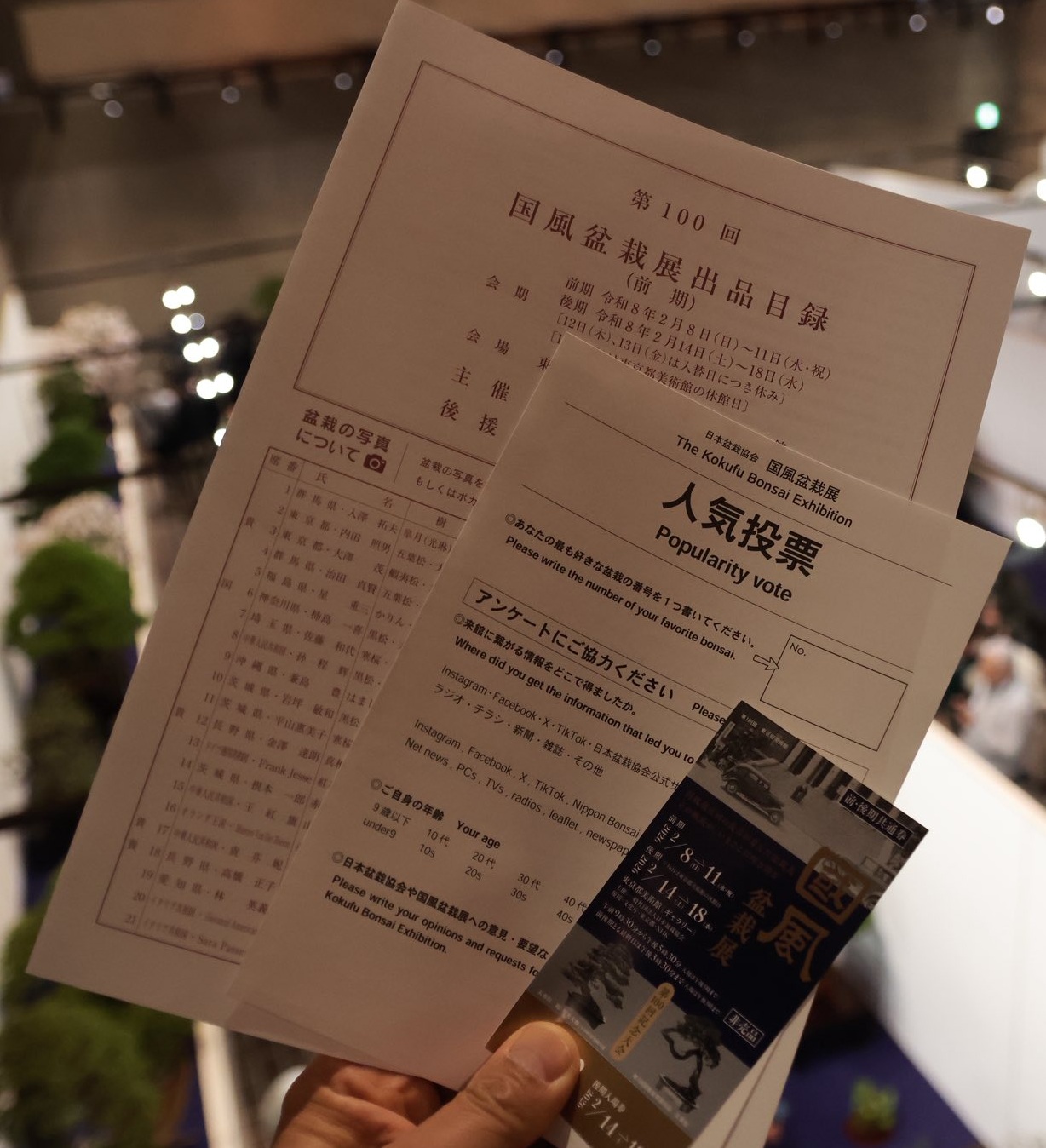
Program, Visitor Vote Ballot and Ticket for the Kokufu-ten, 2026, Part I Photo by Hiroyuki Suzuki |
|
|
|
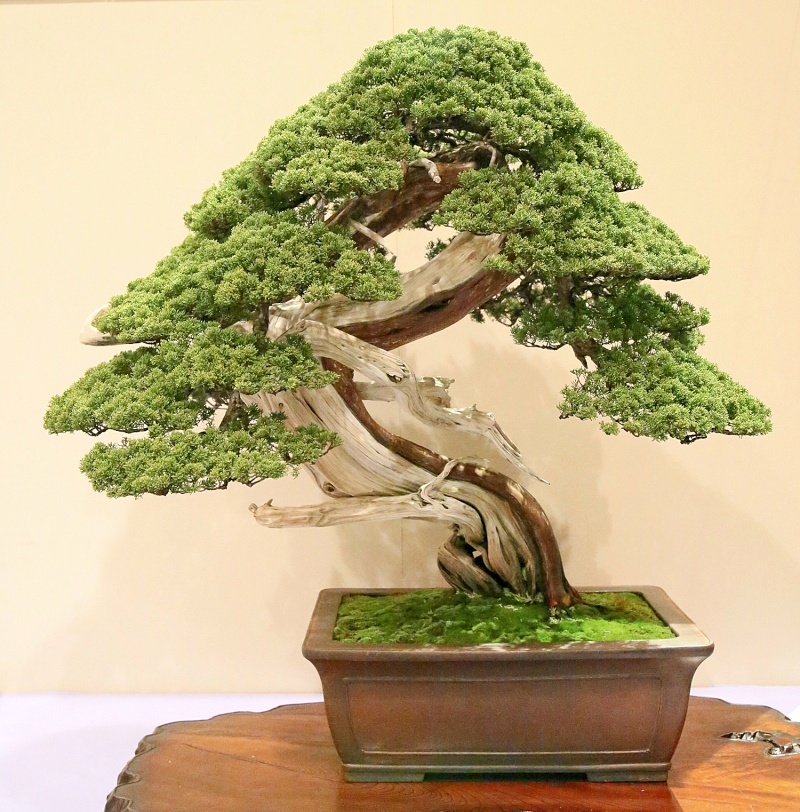
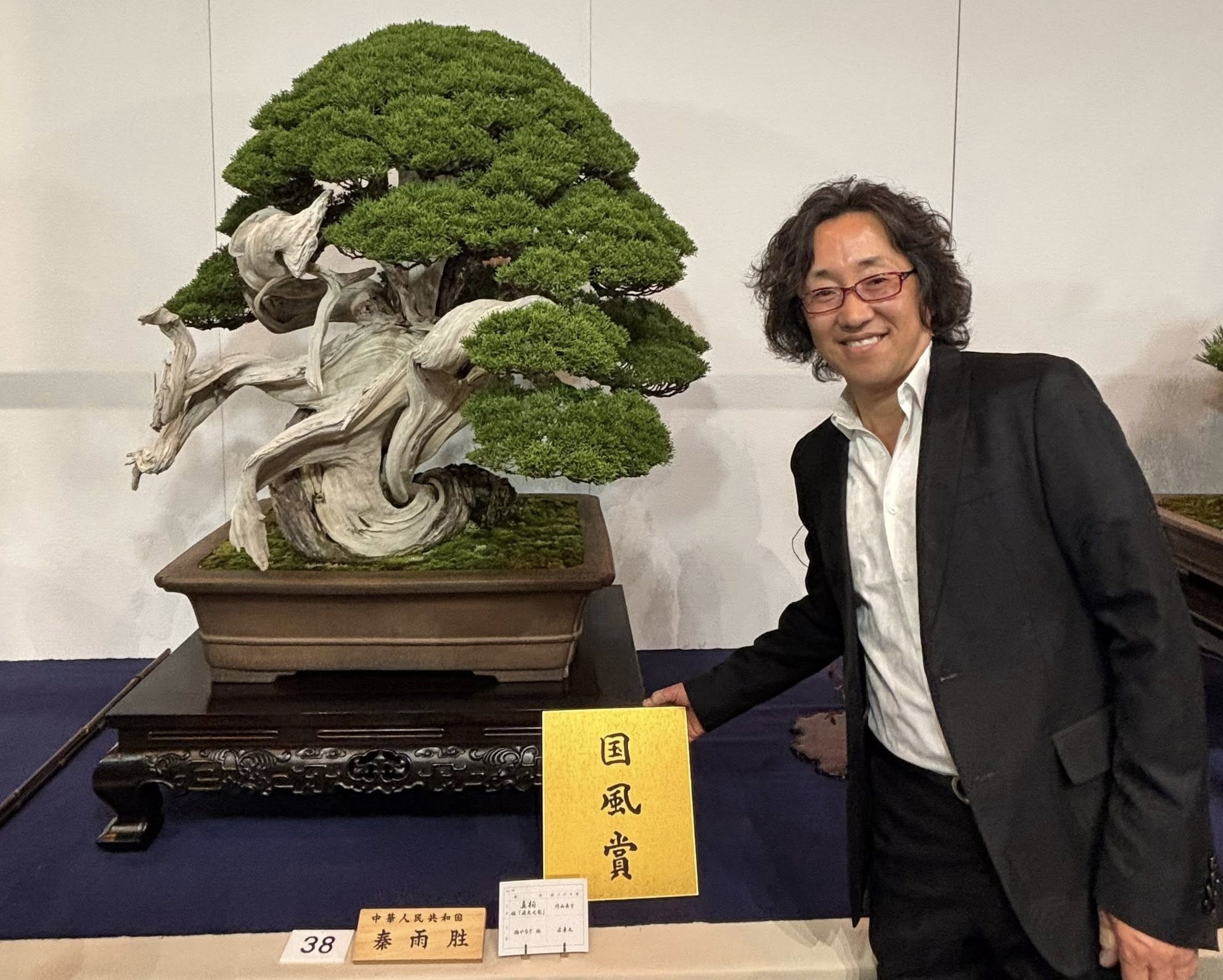
Kokufu Prize, 2026, Part 1: Shimpaku Juniper (Juniperus chinensis var. shimpaku) 1st Shinji Suzuki tree, 2021 Sakufuten Prime Minister's Award for Yoshihiko Moriyama design Photo by Tony Bebb |
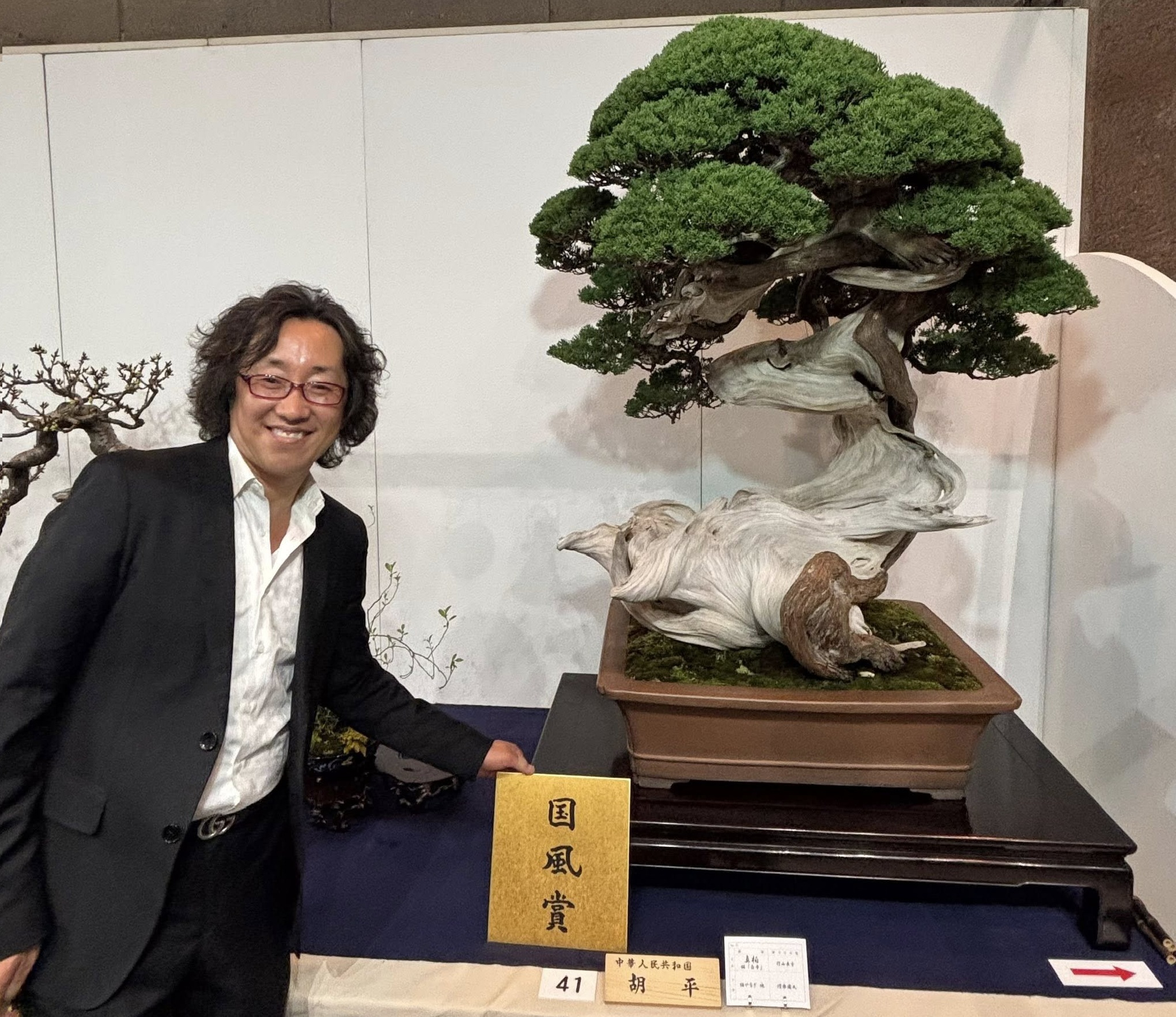
Kokufu Prize, 2026, Part 1: Shimpaku Juniper (Juniperus chinensis var. shimpaku) 2nd Shinji Suzuki tree, named "White Emperor," Sold to a Chinese Collector and Prominent Businessman Photo by Tony Bebb |
|
|
|
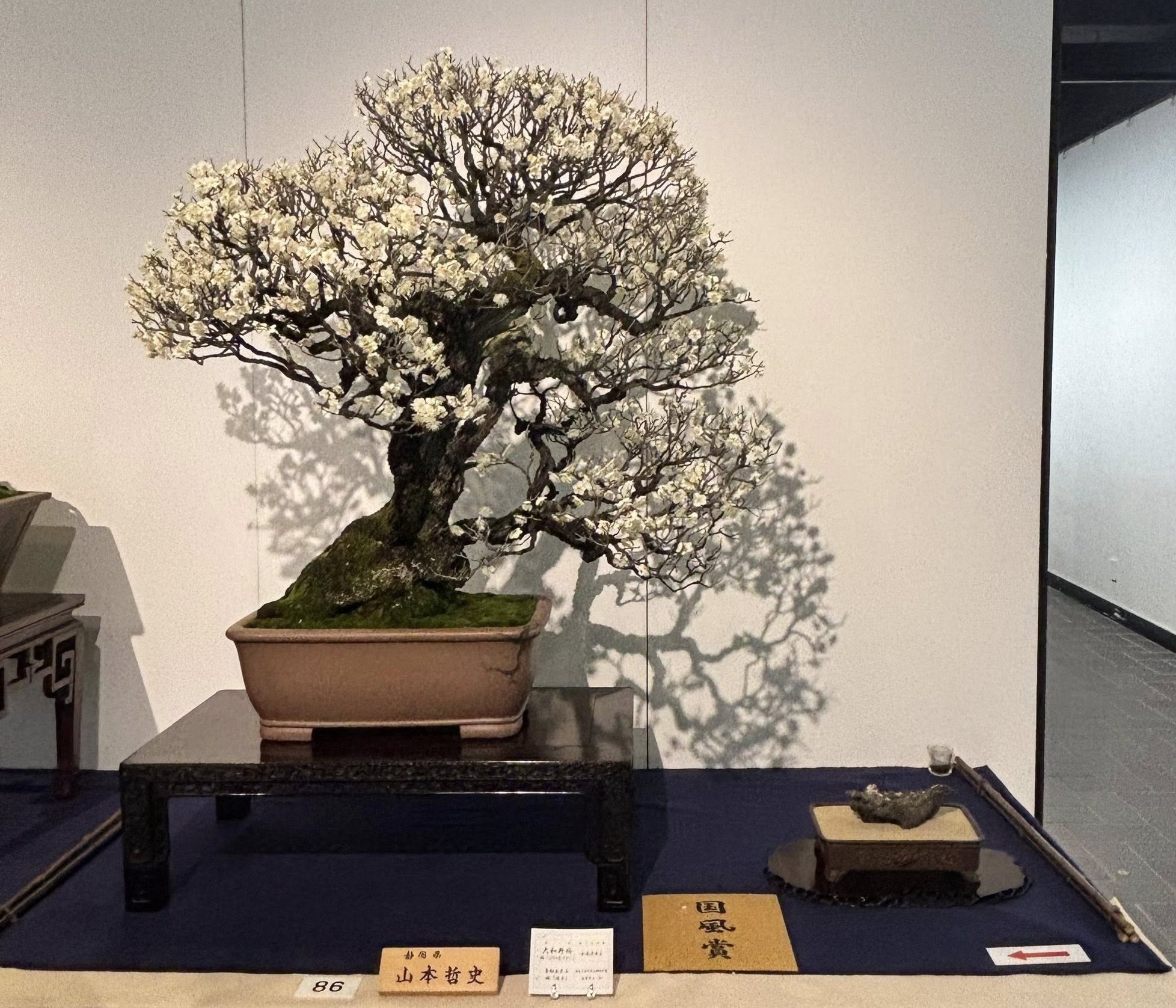
Kokufu Prize, 2026, Part 1: Japanese flowering apricot (Prunus mume 'Yamato-yabai') Photo by Tony Bebb |
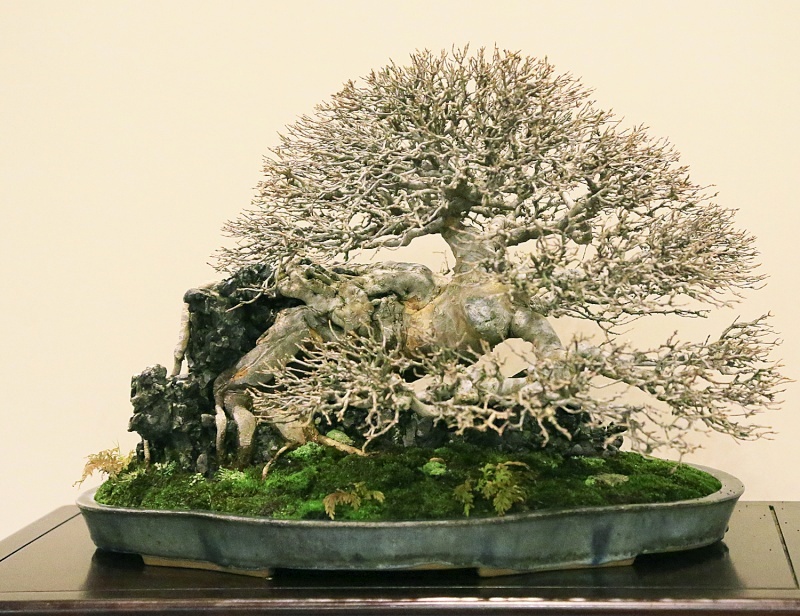
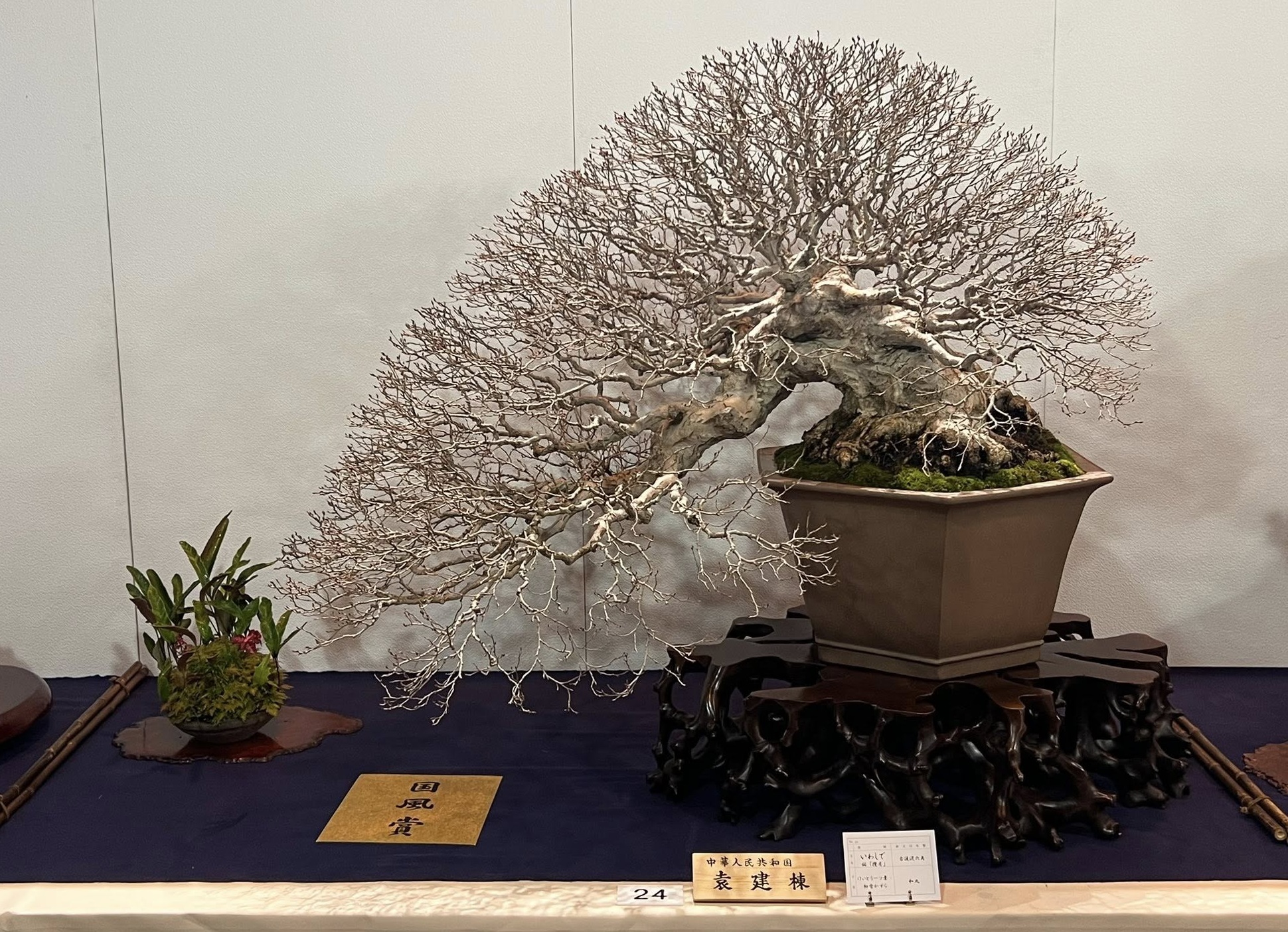
Kokufu Prize, 2026, Part 1: Korean Hornbeam (Carpinus turczaninovii) Photo by Pedro J. Morales |
|
|
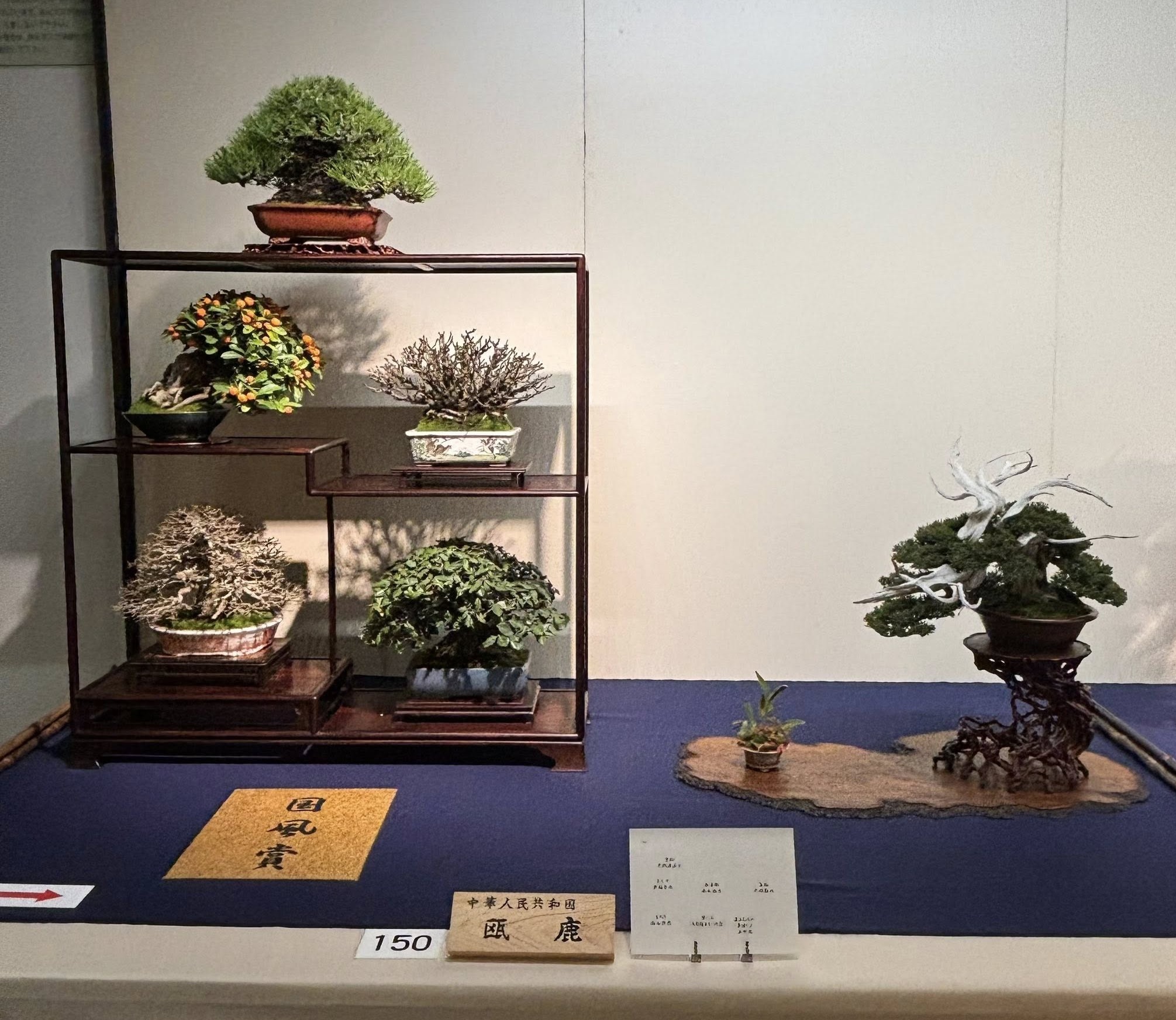
Kokufu Prize, 2026, Part 1: Shohin Bonsai Composition, Seven-point Display, 80cm furniture composition created by Taiga Urushibata and Olu Garden Photo by Tony Bebb |
|
|
|
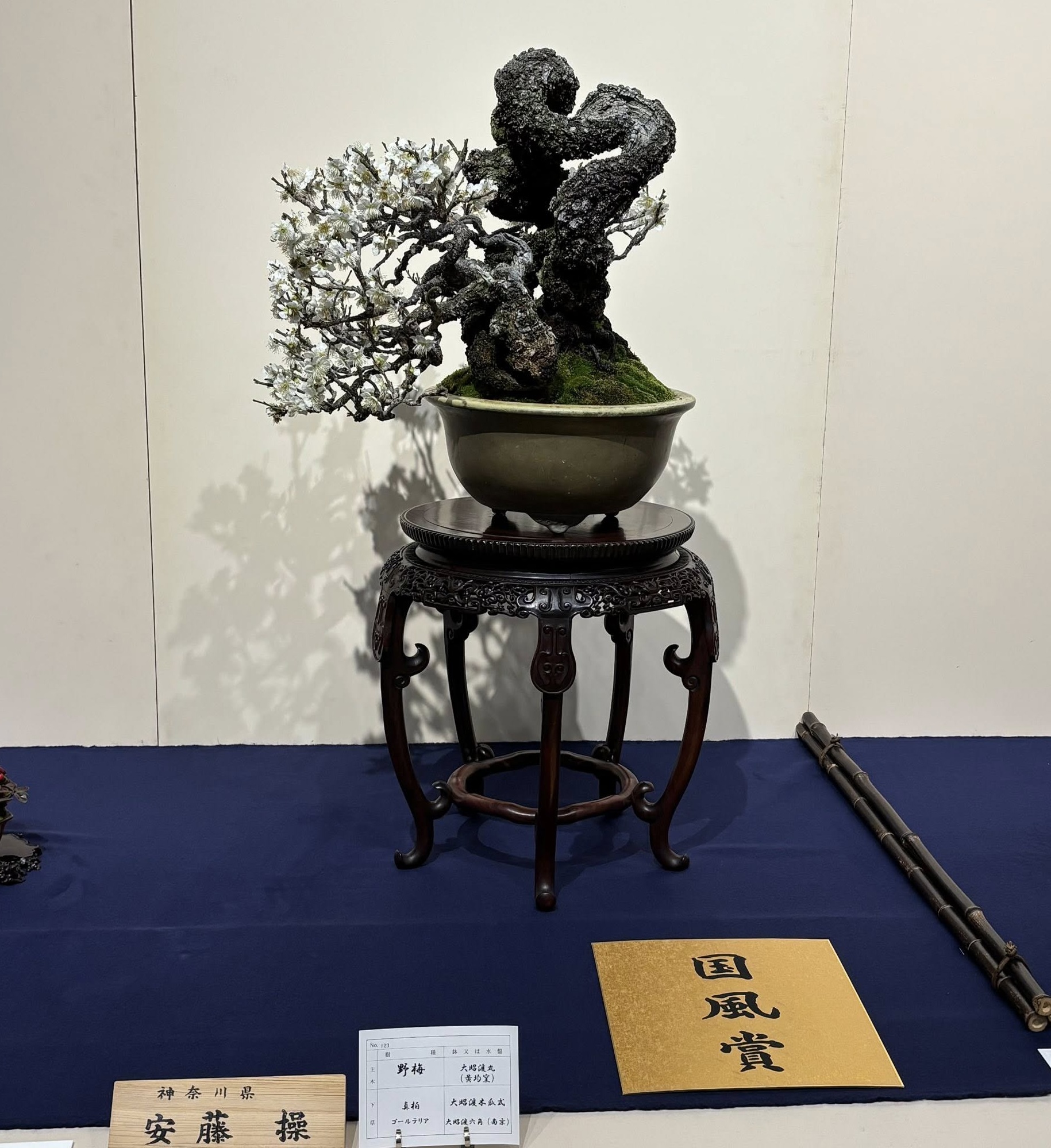
Kokufu Prize, 2026, Part 1: Japanese flowering apricot (Prunus mume) Photo by Tony Bebb |
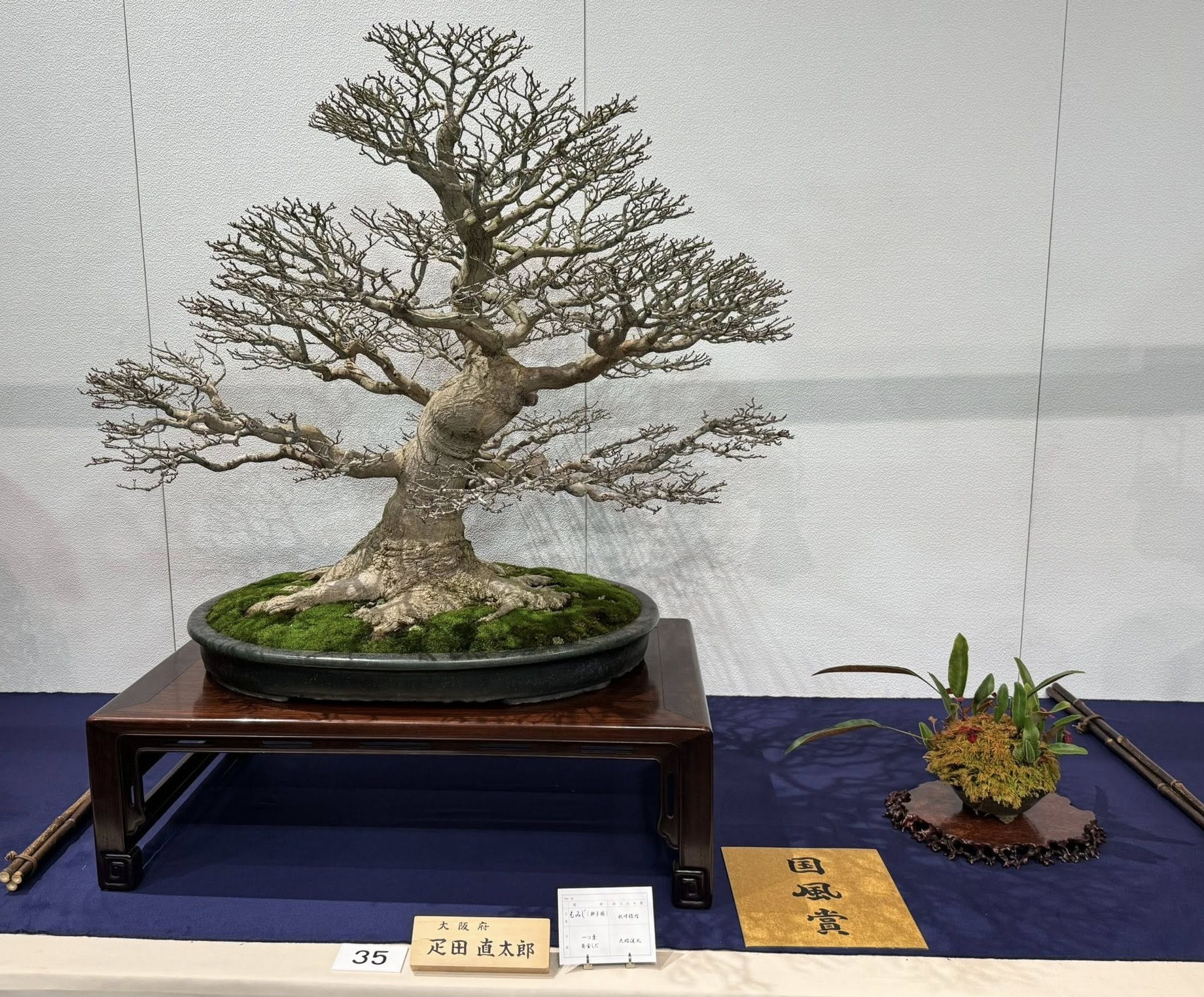
Kokufu Prize, 2026, Part 1: Chinese quince (Pseudocydonia sinensis) Photo by Pedro J. Morales |
|
|
|
Kokufu Prize, 2026, Part 1: Lion's Head Japanese Maple (Acer palmatum 'Shishigashira') Photo by ShinShin Bonsai |
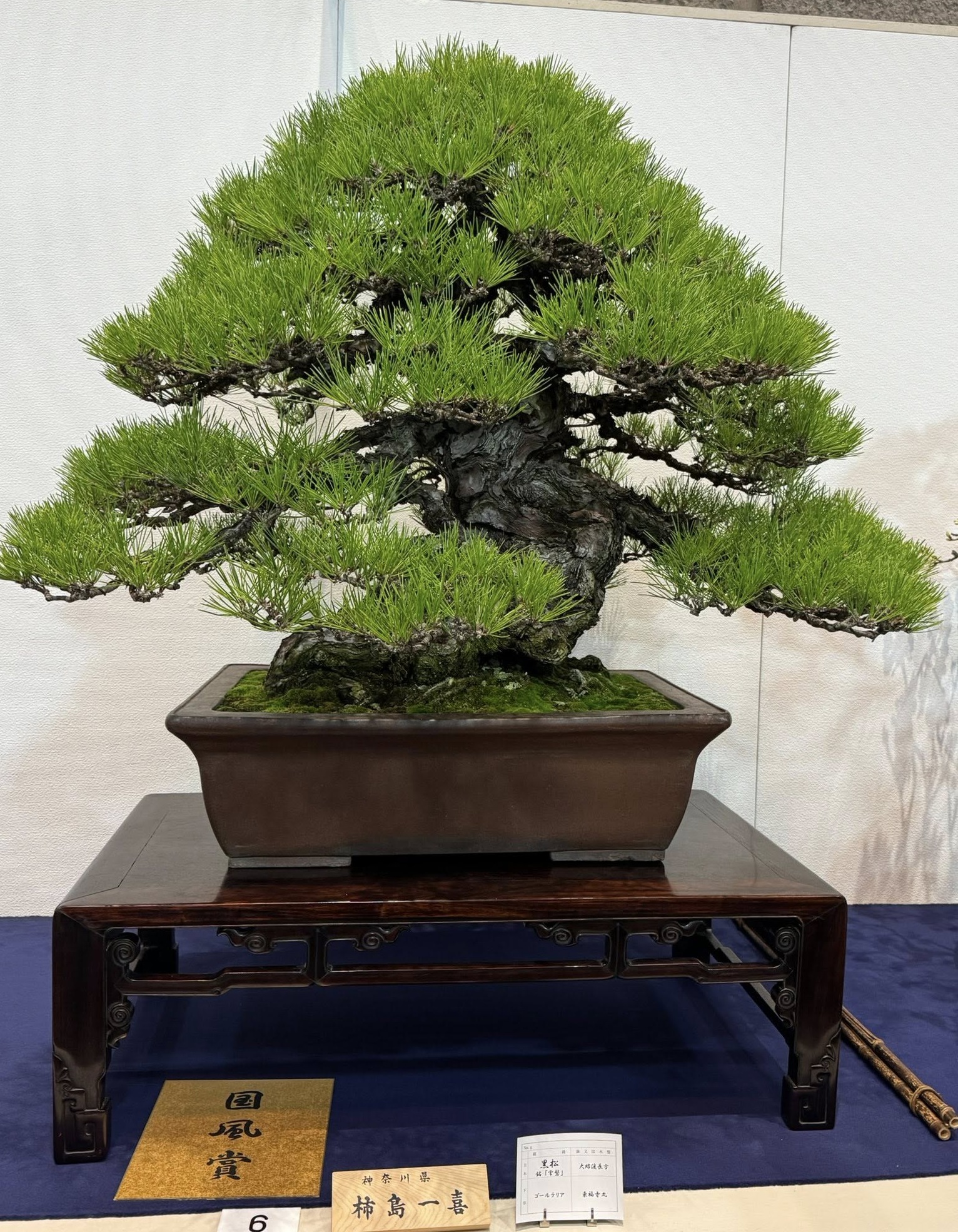
Kokufu Prize, 2026, Part 1: Japanese Black Pine (Pinus thunbergii) Photo by ShinShin Bonsai |
|
|
|
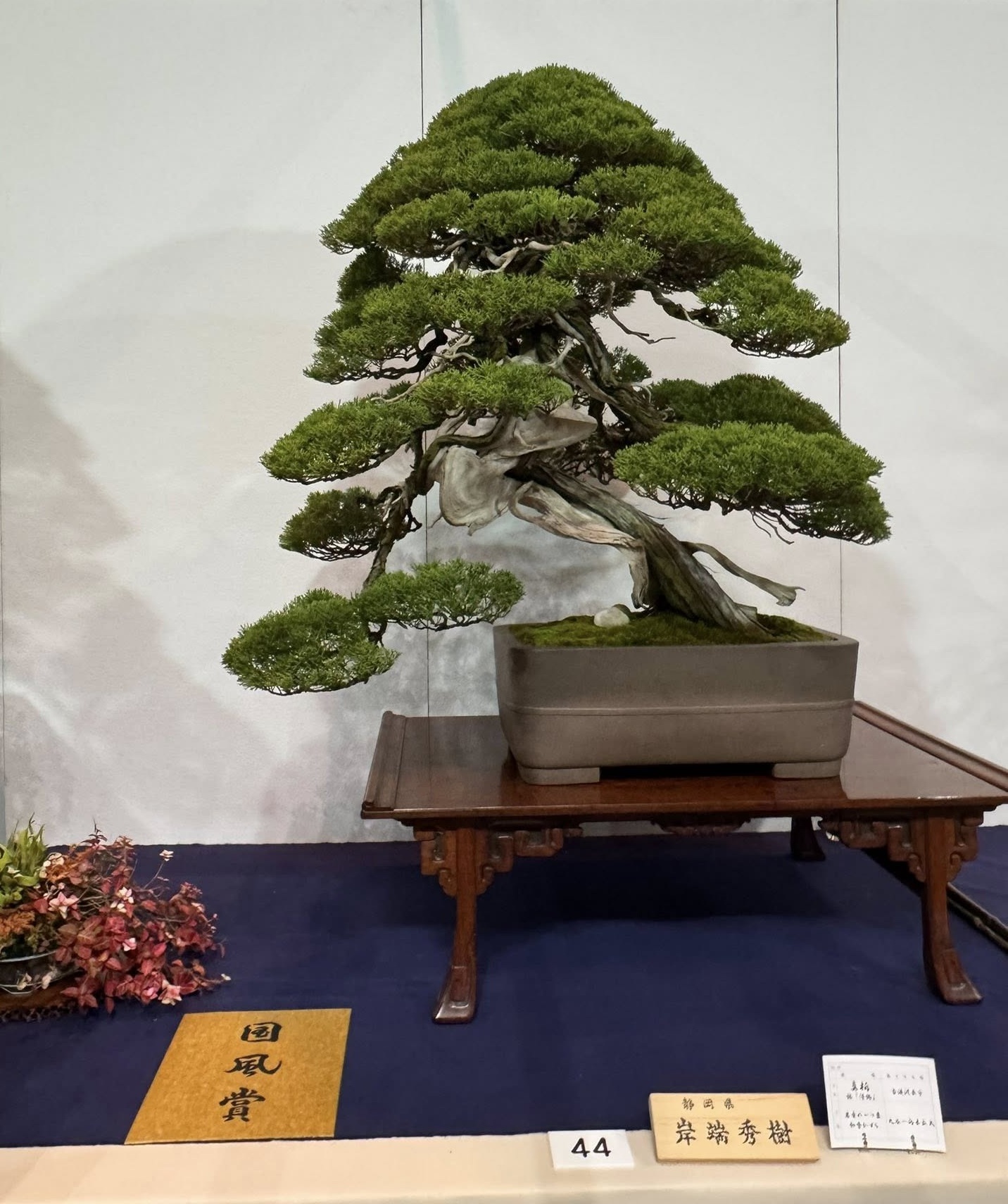
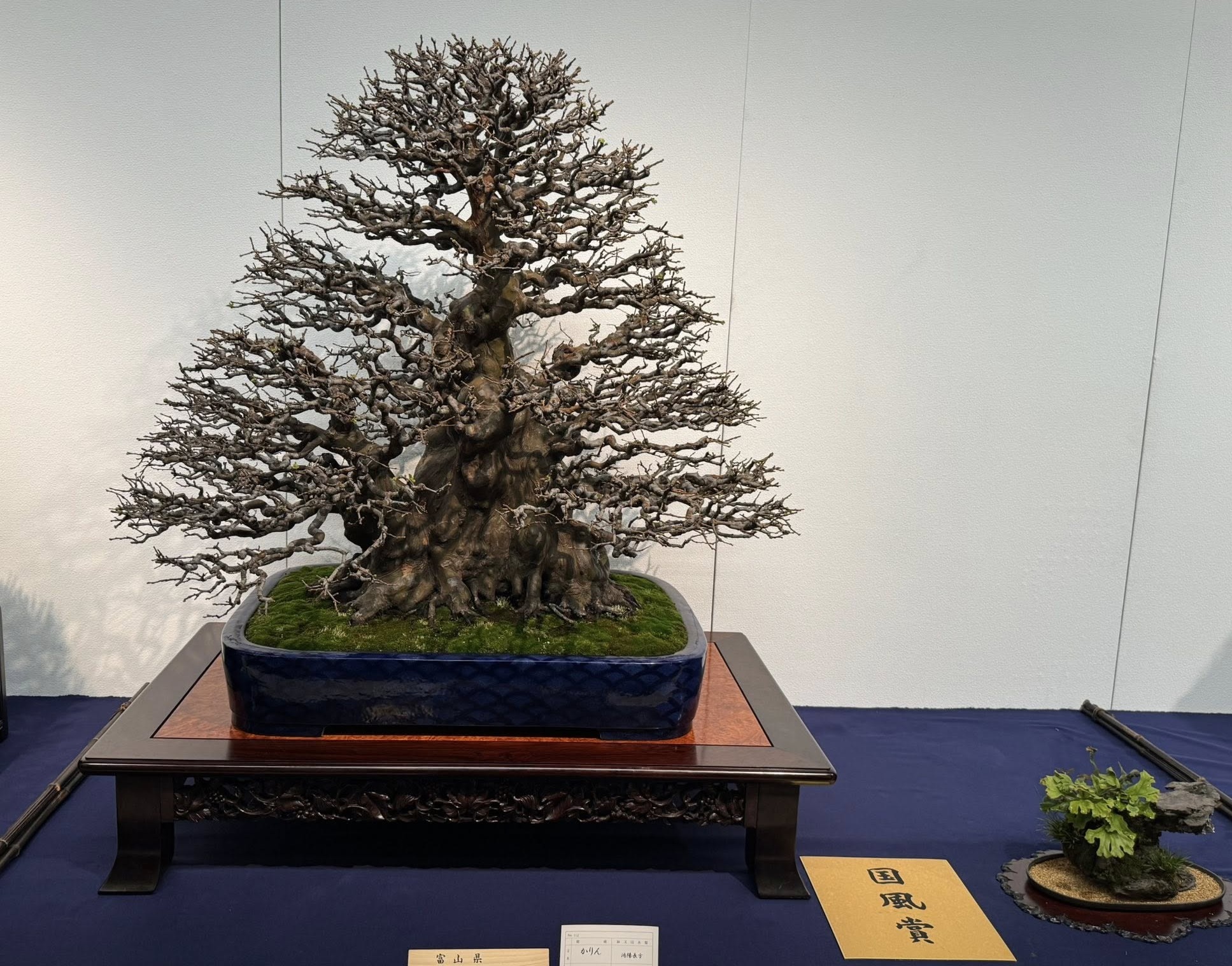
Kokufu Prize, 2026, Part 1: Chinese juniper (Juniperus chinensis var. sargentii) Photo by ShinShin Bonsai |
Kokufu Prize, 2026, Part 1: Chinese quince (Pseudocydonia sinensis) Photo by ShinShin Bonsai |
|
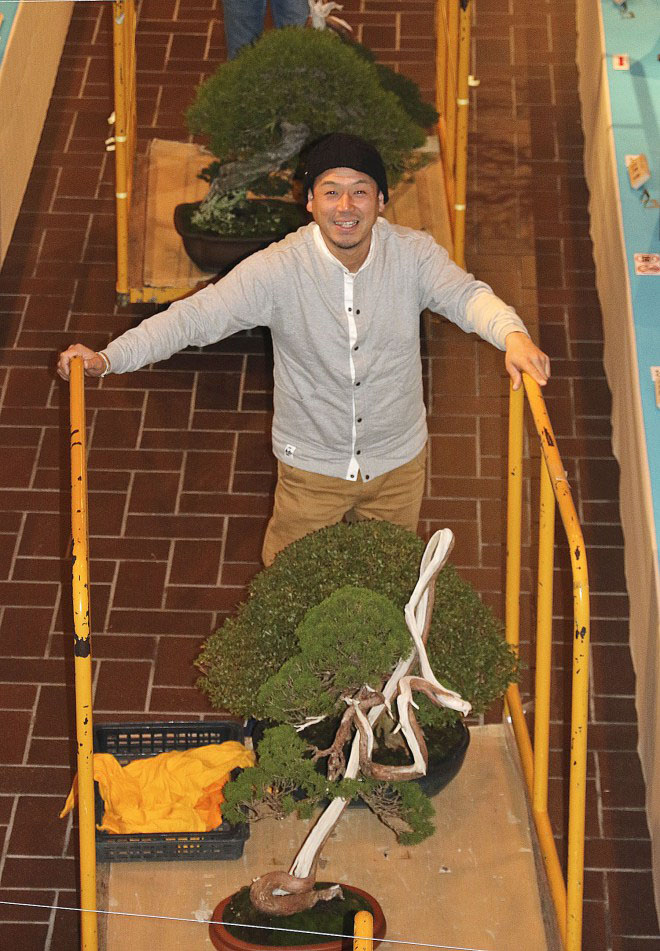
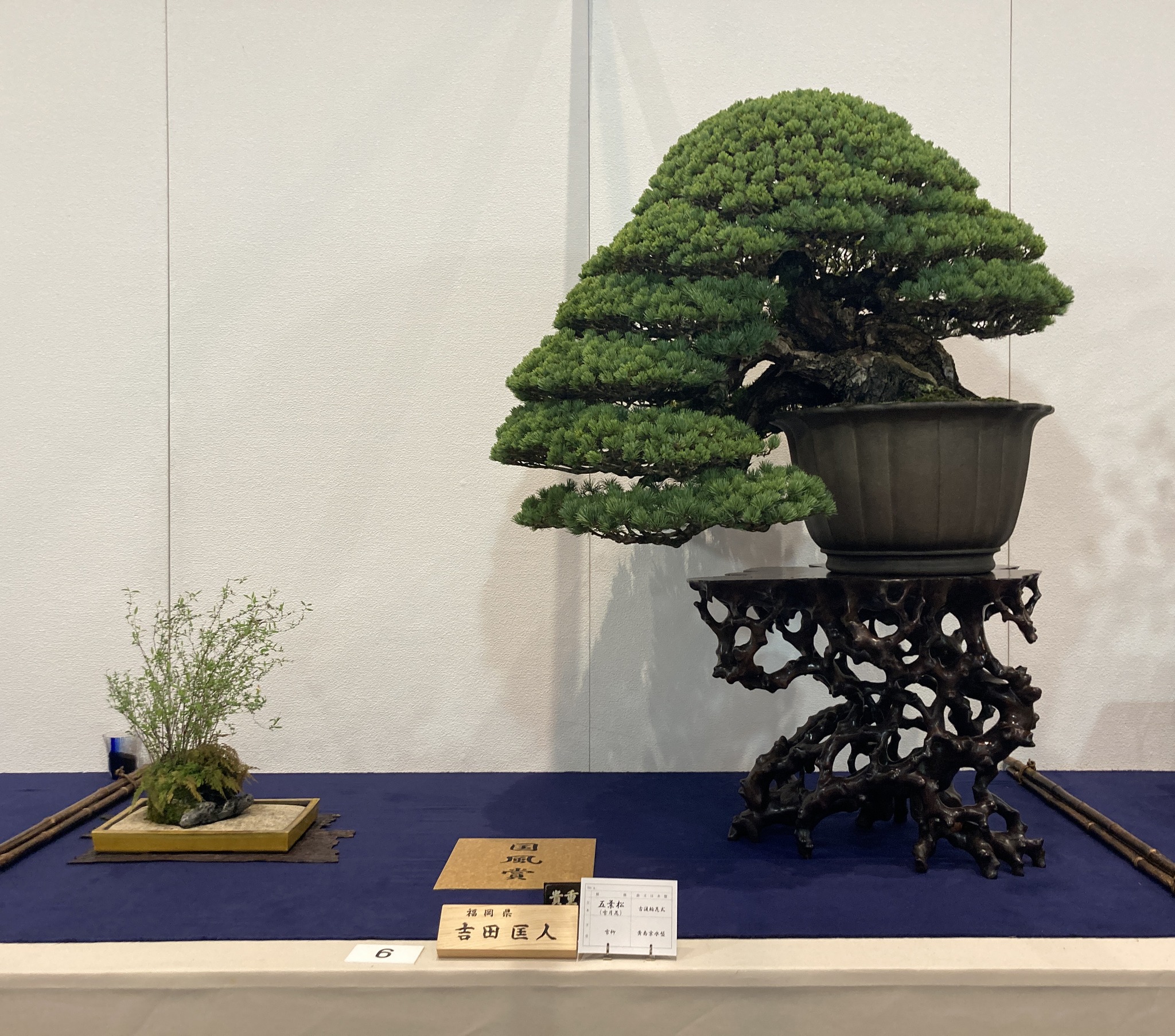
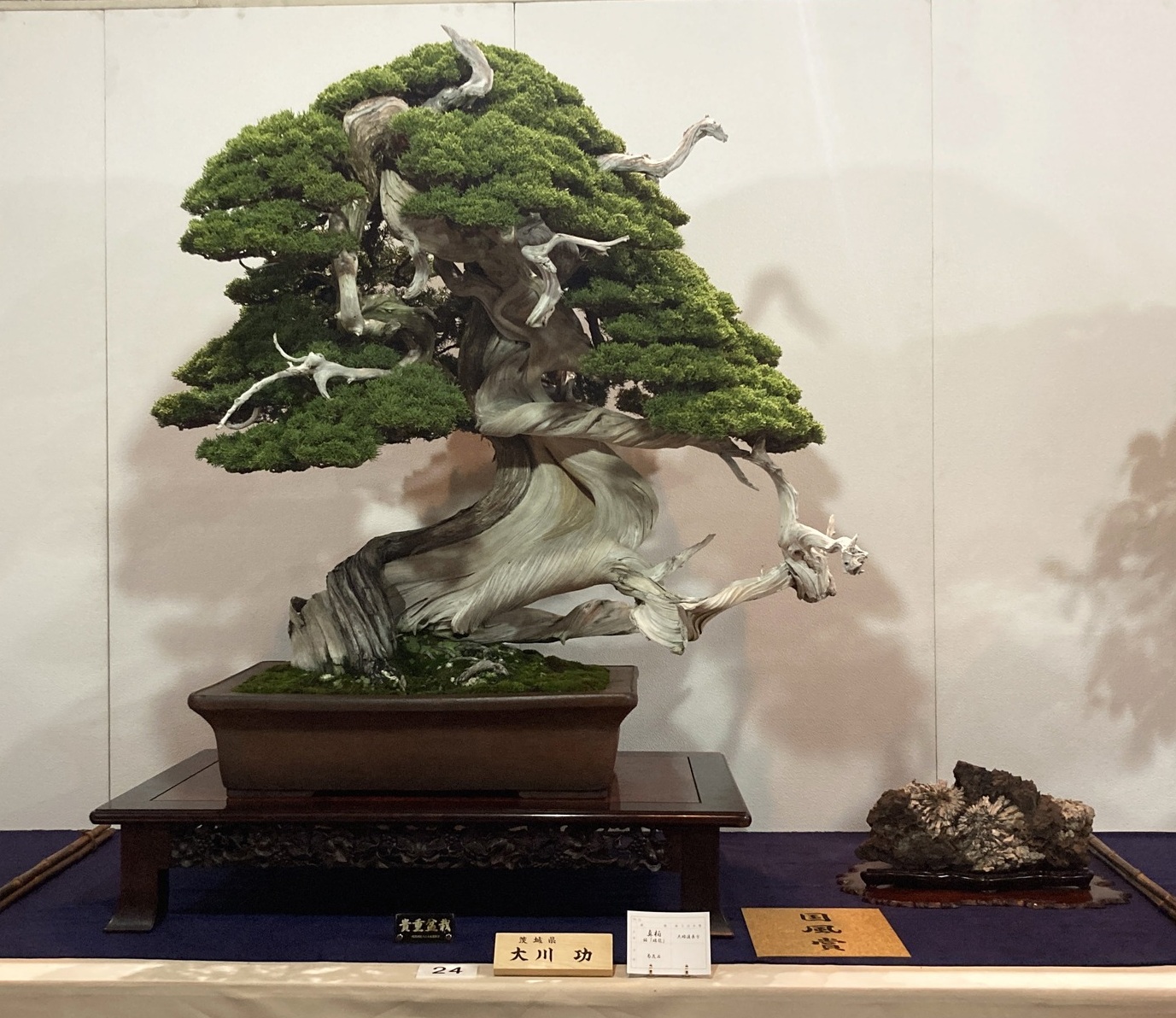
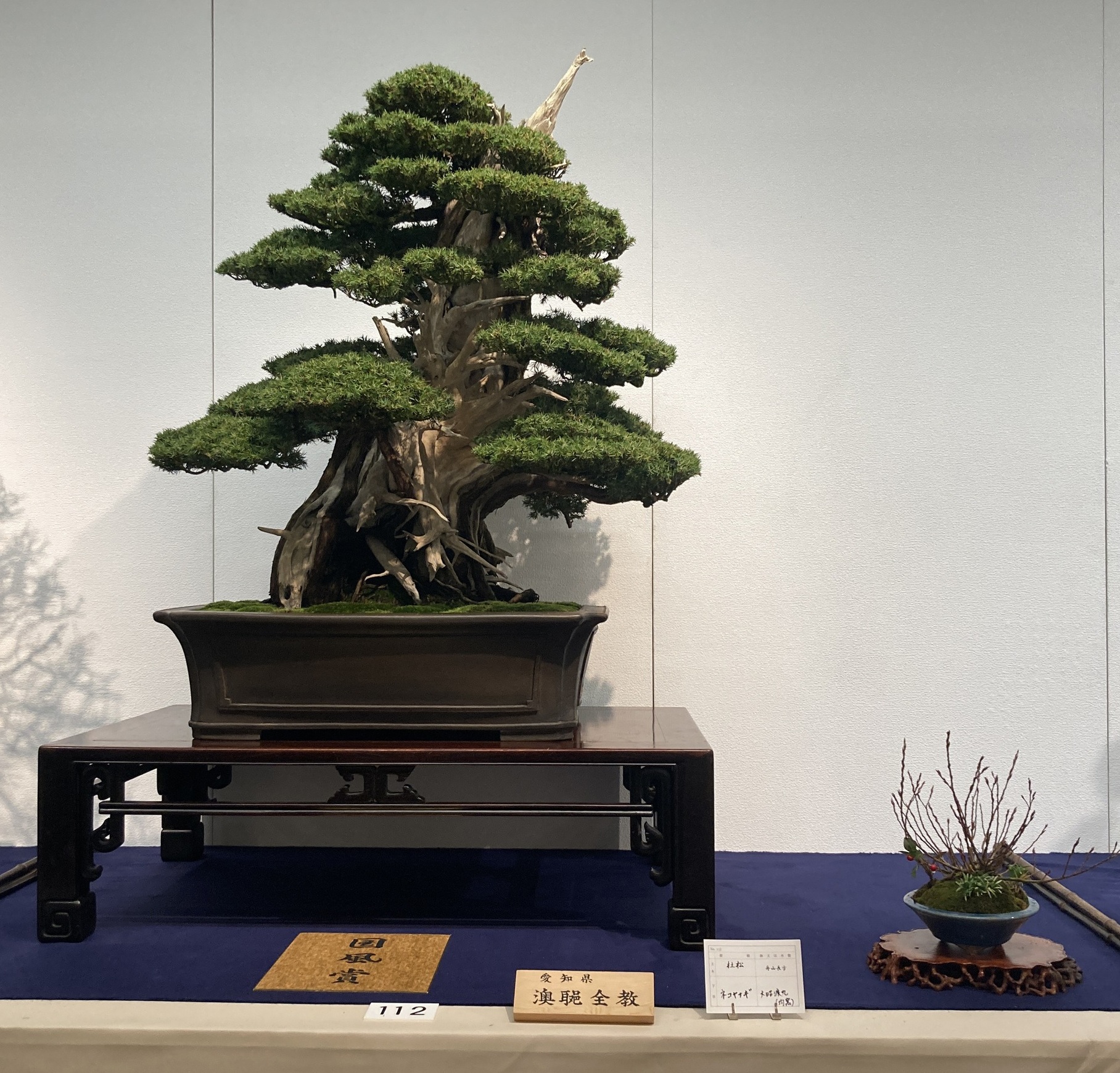
The 100th Anniversary of Kokufuten will be in 2034. In the early years there were two annual shows, one in the spring and one in the fall. This 2026 year's is the 100th show. For Part 1 of this 100th show, eleven (!) Kokufu Prizes were awarded to outstanding bonsai. Normally only three to six Prizes are awarded. With 181 display areas and 287 individual bonsai shown, there were 25 Foreign Exhibitors representing approximately 20 different countries. Their trees were specifically bonsai which had been trained and refined in Japan and were purchased by foreigners waiting to be imported to the owner's countries. Approximately 20% of the displayed bonsai were owned by foreigners. Masahiko Kimura's Artistry was represented by over 40 bonsai owned by clients; Kunio Kobayashi's Artistry was represented by approximately 24 clients; Shinji Suzuki's Artistry was represented by approximately 20 clients. 11 Important Bonsai Masterpieces (kicho) were shown. This year additional display tables were added, more than usual, and the NBA did not have tables to sell the commemorative albums and memberships. The weather was unusually cold this year and about two inches of snow fell. Opening Day attendance was about 2,500 visitors, over 70% non-Japanese. On Feb. 12 and 13 all the bonsai on display were removed and replaced with fresh trees. This is a monumental task every year, especially since all the bonsai are quite large and heavy, usually requiring two, three or four people to lift the largest specimens. The flatbed rolling carts are limited in number so that makes the time longer for moving. Fortunately, all the large-size bonsai were on the first floor. The smaller trees required using elevators which also took time. For Part 2 of this 100th show, ten Kokufu Prizes were awarded. With 181 display areas and 253 individual bonsai shown, there were 12 Foreign Exhibitors representing 10 different countries. 28 Important Bonsai Masterpieces (kicho) were shown. |
|
|
|
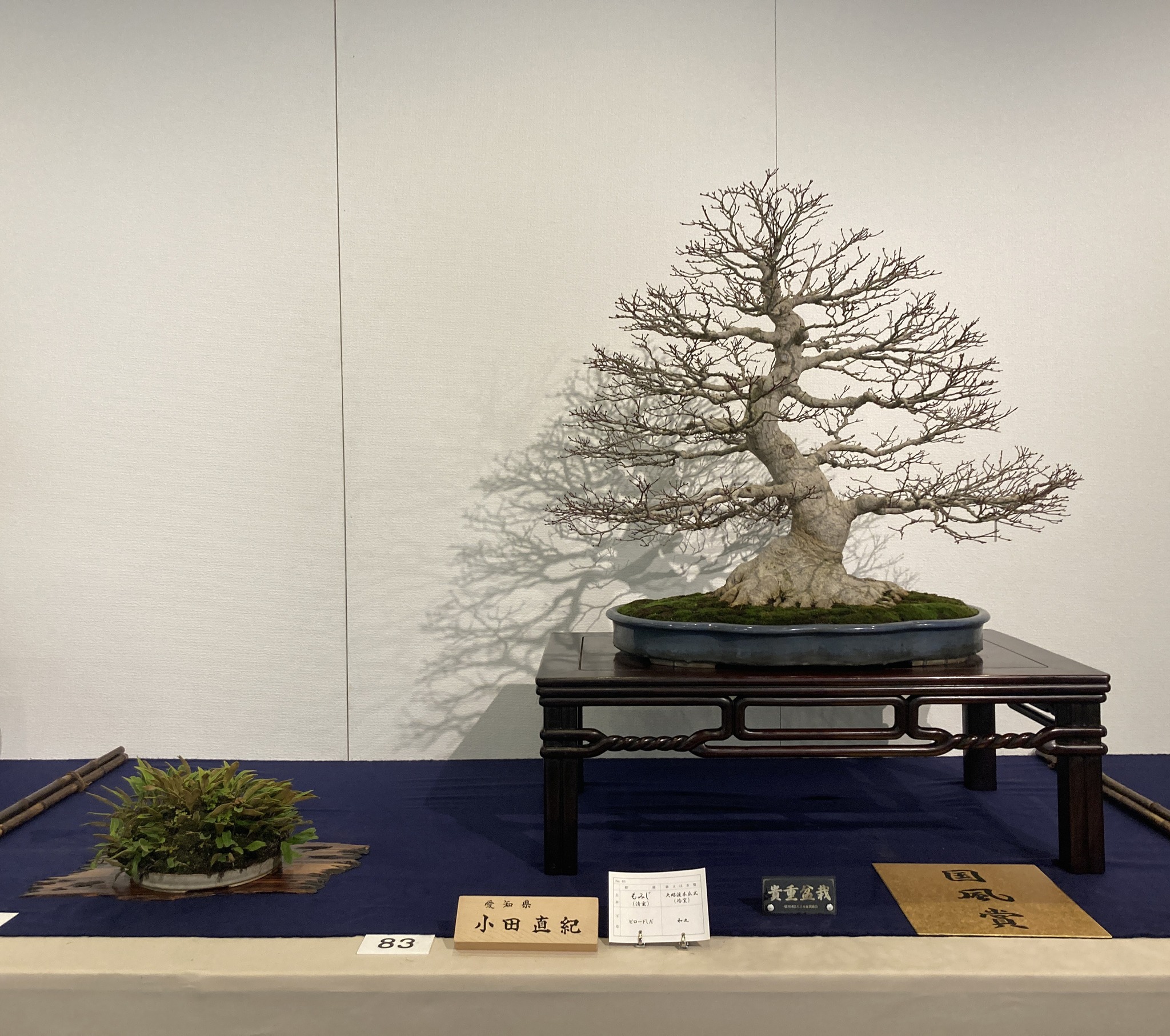
Kokufu Prize, 2026, Part 2: Japanese White Pine (Pinus parviflora 'Setugetuka') Photo by Kinbon Bonsai |
Kokufu Prize, 2026, Part 2: Chinese Juniper (Juniperus chinensis var. sargentii) Photo by Kinbon Bonsai |
|
|
|
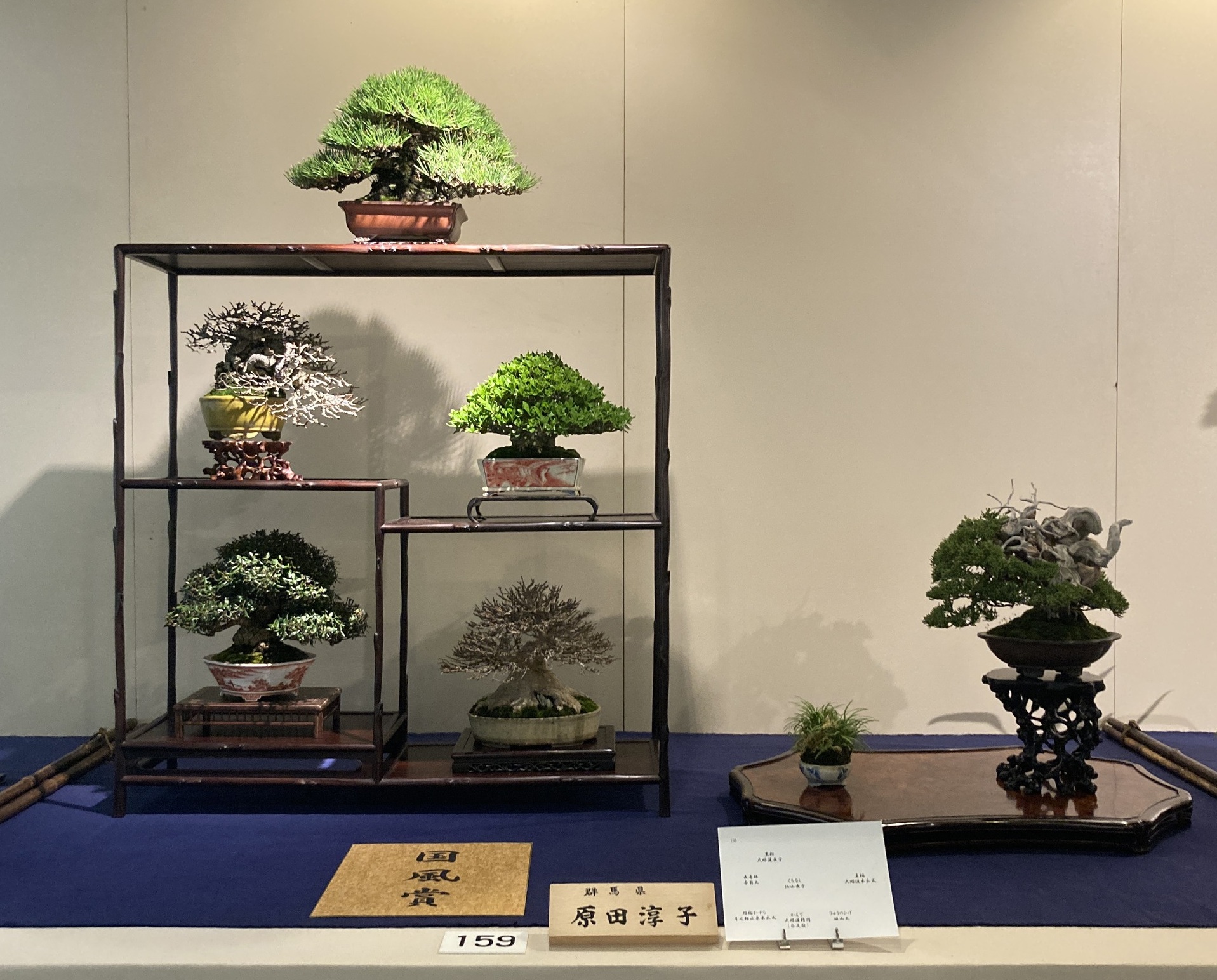
Kokufu Prize, 2026, Part 2: Tosho needle juniper (Juniperus rigida) Photo by Kinbon Bonsai |
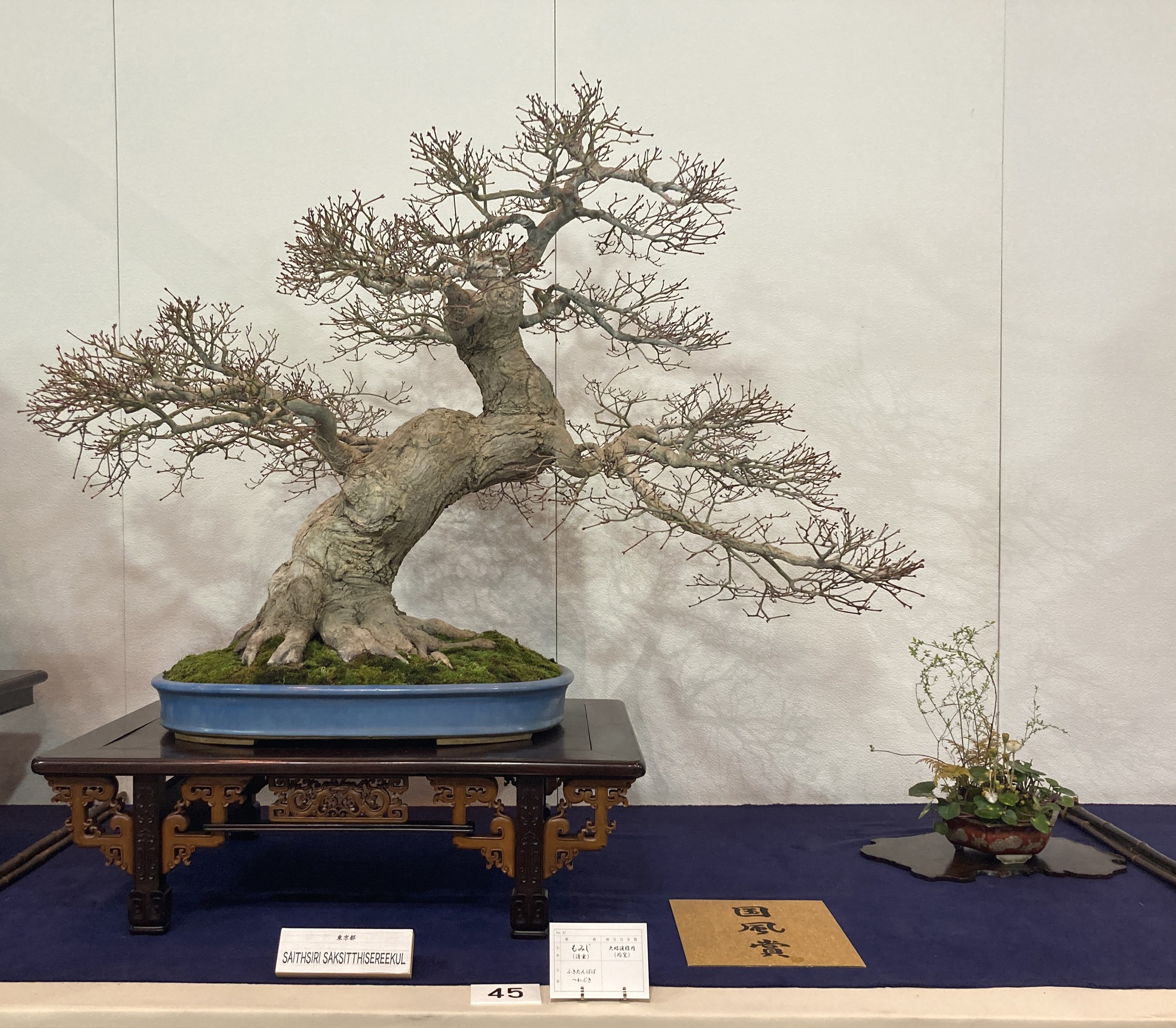
Kokufu Prize, 2026, Part 2: Japanese maple (Acer palmatum 'Matsumurae'), this is a kicho. Photo by Kinbon Bonsai |
|
|
Kokufu Prize, 2026, Part 2: Shohin Bonsai Composition Photo by Kinbon Bonsai |
|
|
|
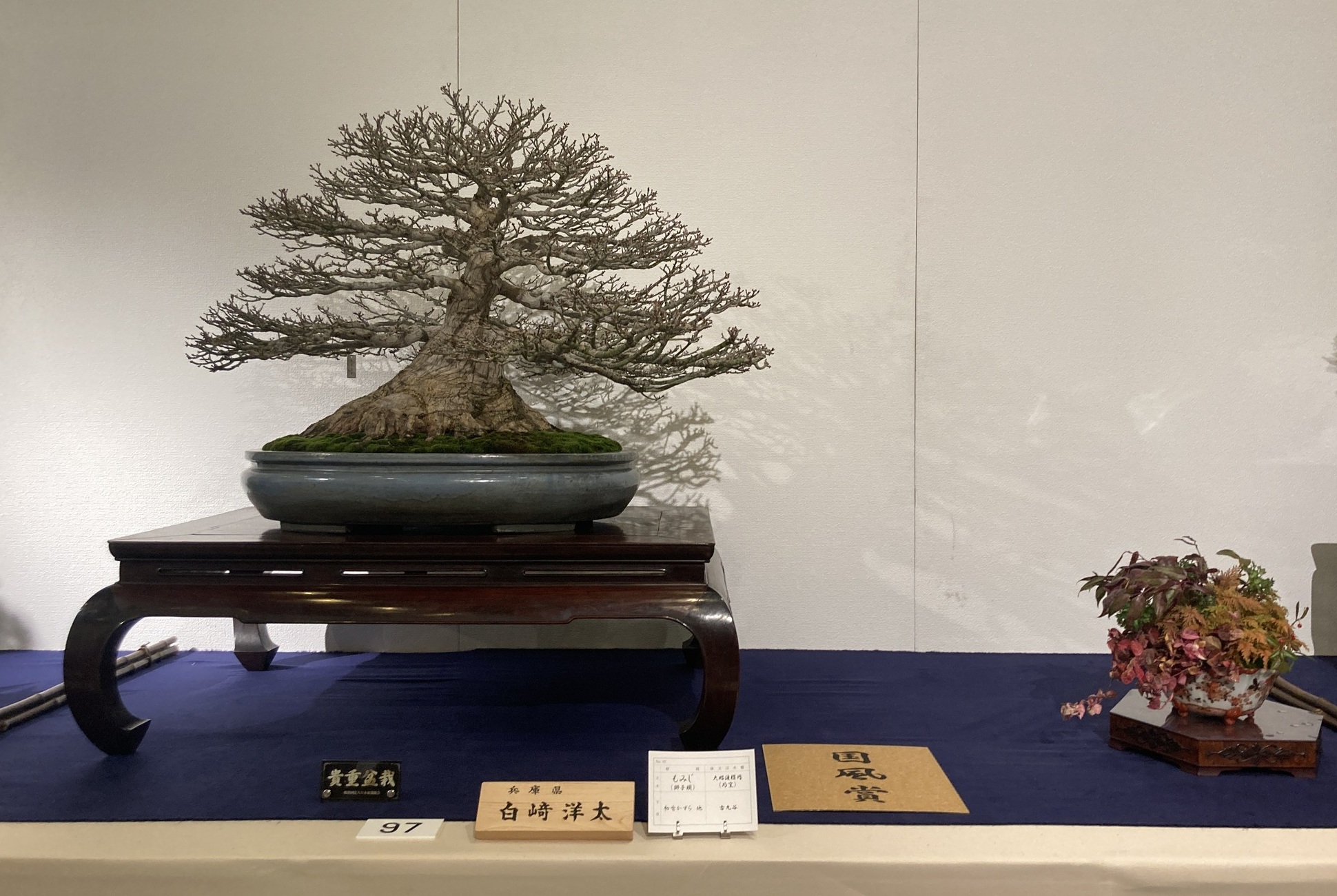
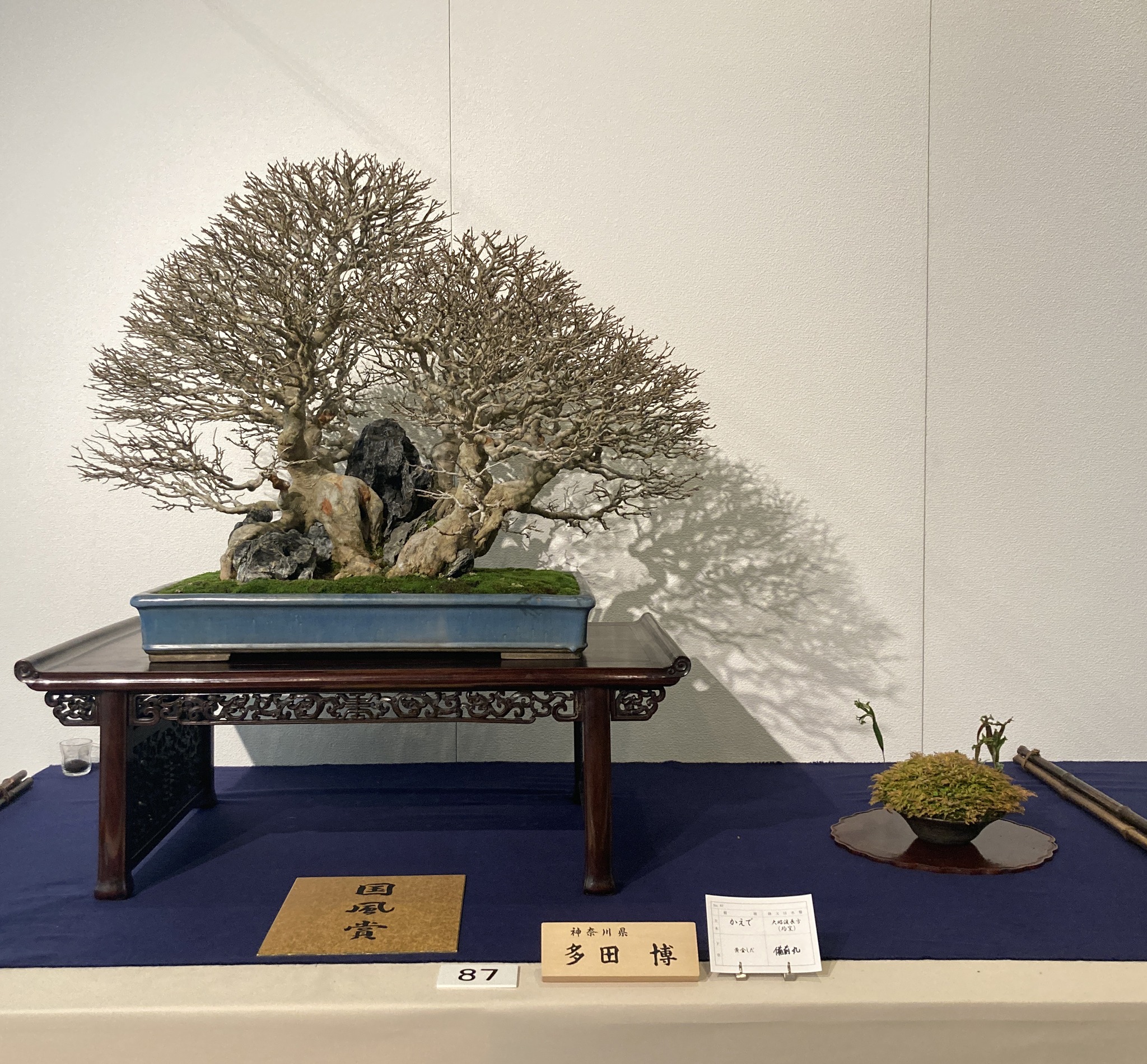
Kokufu Prize, 2026, Part 2:Japanese maple (Acer palmatum 'seigen'), Photo by Kinbon Bonsai |
Kokufu Prize, 2026, Part 2: Japanese maple (Acer palmatum 'Shishigashira'), this is a kicho. Photo by Kinbon Bonsai |
|
|
|
Kokufu Prize, 2026, Part 2: Photo by Kinbon Bonsai |
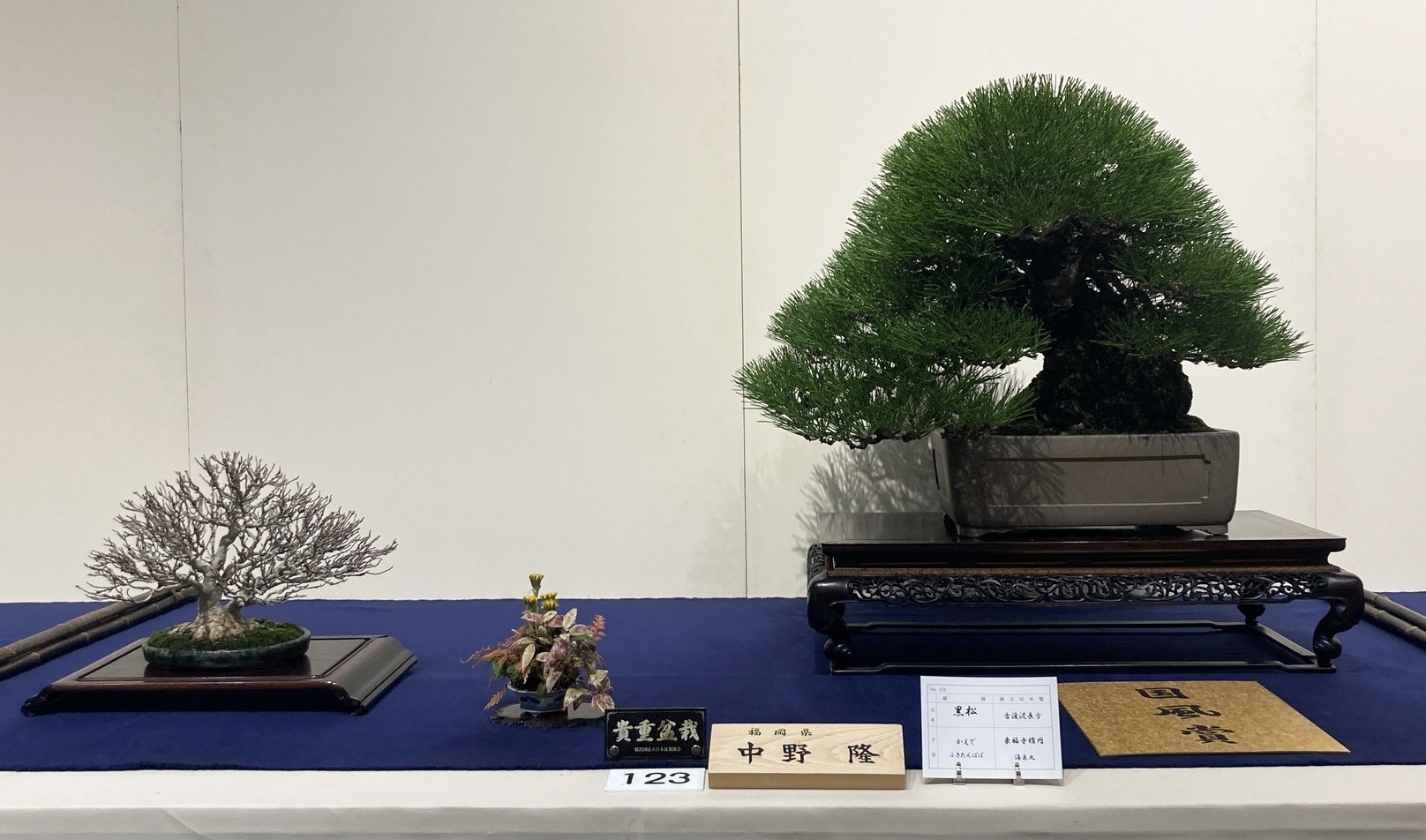
Kokufu Prize, 2026, Part 2: Japanese Black Pine (Pinus thunbergii) Photo by Kinbon Bonsai |
|
|
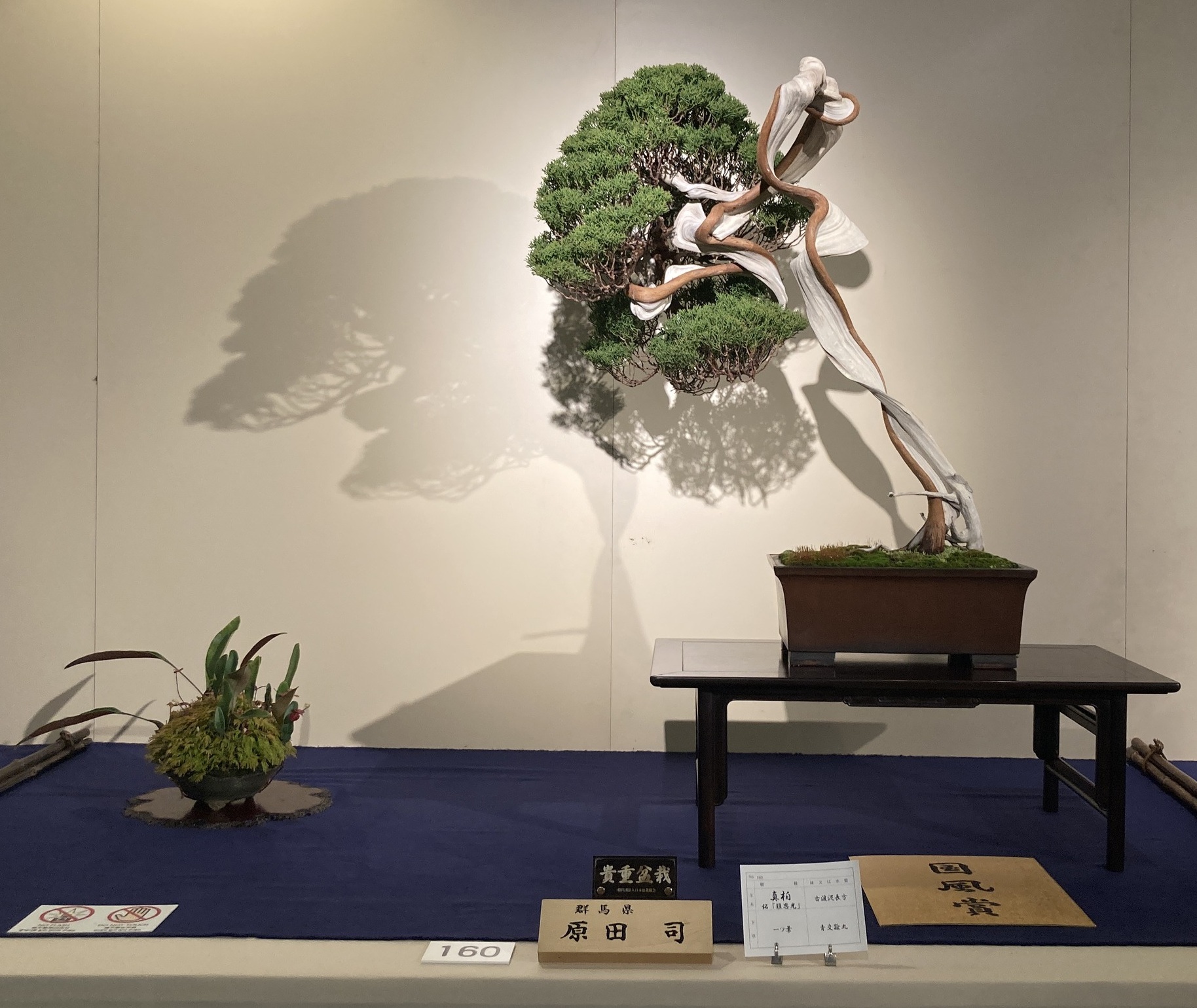
Kokufu Prize, 2026, Part 2: Juniper (Juniperus sp.) Photo by Kinbon Bonsai |
|
|
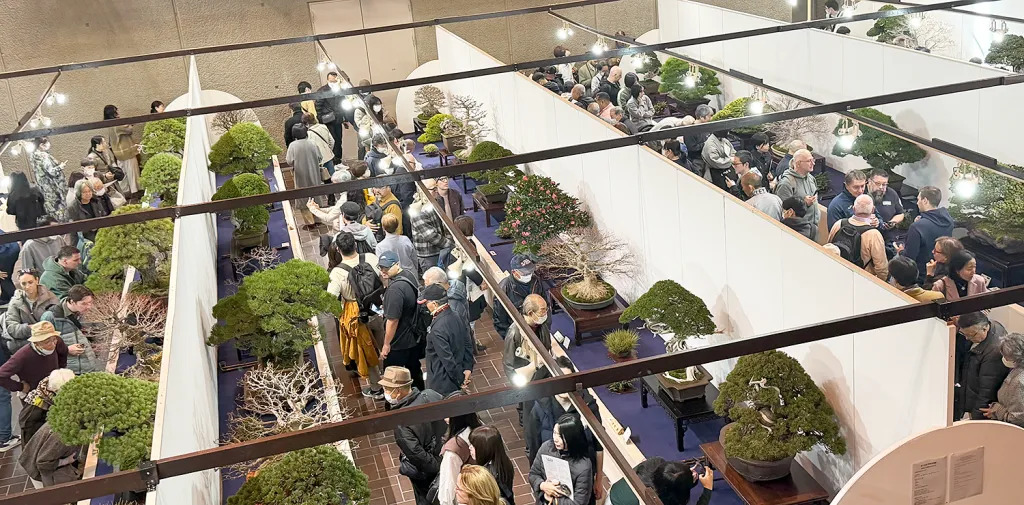
100th Kokufu show, 2026, Part 2: Saturday morning visitors, larger crowds than have been seen in over 40 years Photo by William N. Valavanis |
|
Kokufu-Ten 2026 -- Exhibition Part 1
|
| A Forty-nine-and-a-half-minute-long Video of the 100th
Kokufu Ten, 2026, Part I by Black Label Bonsai |
|
Kokufu-Ten 2026 -- Exhibition Part 2-A
|
| A Thirty-one-and-a-half-minute-long Video of the 100th
Kokufu Ten, 2026, Part 2-A by Rome Tokyo one way Question: Is the juniper starting at the 14:47 minute mark actually a tanuki, with the front trunk being deadwood and the back trunk being alive? |
|
Kokufu-Ten 2026 -- Exhibition Part 2-B
|
| A Twenty-four-minute-long Video of the 100th
Kokufu Ten, 2026, Part 2-B by Rome Tokyo one way |
|
The Imperial Family Visits Kokufu-Ten 2026
|
| A Two-and-a-half-minute-long Video of the Imperial Family Visiting the 100th Kokufu Ten, 2026 by ANNnewsCH |
|
63rd Exhibition of Japanese Suiseki Masterpieces
|
| A Forteen-minute-long Video of the 63rd Exhibition of
Japanese Suiseki Masterpieces by WABI Channel |
|
Ueno Green Club Walkthrough 2026
|
| A Six-and-a-third-minute-long Video Walkthrough of the Ueno Green Club for the 100th Kokufu Ten by Ukiyo Bonsai |
|
Kokufu-Ten 2026 Judging Venue
|
| A Twenty-one-and-a-third-minute-long Video of the judging
venue for the 100th Kokufu Exhibition. by bonsaiQ |
| (2025-2017 Show Details with video links can be found
here.) |
|
Attendance for the 90th Kokufu Ten in 2016 was estimated at about 20,000 people. Parts 1 and 2 each had 181
display areas; however, there were a great number medium-size bonsai which usually include two or more trees.
In Part 2 there were only four shohin bonsai compositions which each had more than five specimens.
So there were actually approximately 250 individual bonsai on display. That year, for the first time in
modern history, photographs were allowed, but without flash. Visitors had cell phones snapping away, as
well as some with larger cameras. (A few years earlier some visitors had complained to the Nippon Bonsai
Association that the click of cameras bothered their appreciation of the bonsai.) Starting with the 60th Kokufu Bonsai Exhibition in 1986, the Nippon Bonsai Association has commemorated every tenth anniversary year by holding the exhibition in two parts. In order to present more bonsai recently also, the events in 2014 and 2015 were scheduled in two parts, each lasting four days with a switch-out day between when all the trees would be changed on Saturday. The first part of 2014's Exhibition (the 88th, Feb. 4 - 7) was composed of 170 displays, including 29 kicho Bonsai (Important Bonsai Masterpieces). These are automatically accepted into the show. After the exhibition was set up a group of judges awarded five coveted National Awards (Kokufu-sho). There were only five shohin bonsai compositions, a mame bonsai composition was not included in this part. There were 46 medium-size three-point exhibits which included a main bonsai, often two, and a companion planting. Considering that each shohin bonsai composition had six main bonsai and a side tree (all very consistent which shows the current taste of display) and most medium size exhibits had two trees nearly 300 individual specimens were shown. Two Americans, Doug Paul and Frank Cucchira, displayed Sargent juniper bonsai. Another exhibitor from Italy also displayed a Sargent juniper bonsai and received one of the five Kokufu-sho awards, the first time for a foreigner. Unlike in previous years, there were pink lights against the bright blue table coverings with the addition of dramatic spot lighting which did not make it easy to photograph the compositions. The 2014 Part 2 was held from Feb. 9 - 12. It also had 170 displays, 26 kicho Bonsai, and 55 medium size bonsai. There were again only 5 shohin bonsai compositions. The judges selected six Kokufu prize bonsai for Part 2. |
|
(As much as 27 centimetres -- 10.6 inches -- of snow was recorded in Tokyo by late Saturday, February 8, 2014,
the heaviest fall in the capital for 45 years, according
to the meteorological agency. The snow storm hit the capital on the eve of its gubernatorial
election. Observers say the heavy snowfall may have affected voter turnout in the city of 13 million
people. The storm's affect on Kokufu Ten attendance was not reported.) (History was made on February 9-13, 2014 when the newly reorganized Nippon Suiseki Exhibition held the first ever suiseki exhibition at the Tokyo Metropolitan Art Museum. Under the leadership of Kunio Kobayashi (Chairman) and Seiji Morimae (Secretary General), the event was held concurrently during Part 2 of the Kokufu Bonsai Exhibition so people could enjoy both arts in one venue (separate floor galleries). This brought a new era to the combination, appreciation and promotion of bonsai and suiseki.) For the 2013 show there were six National Prize winners (see about two-thirds down the page). Also there were seventy Kicho Bonsai displayed. For the 2012 show there were four National Prizes: Japanese black pine, Satsuki Osakazuki, Shimpaku juniper, and a Shishigashira Japanese maple. For the 2011 show there were five National Prizes: Japanese flowering apricot, Sargent's juniper, Ezo spruce, Korean hornbeam, and a Japanese five-needle pine. Forty-five trees were listed as important Bonsai Masterpieces. In comparison, for the first half of the double-show 2006 year, three of he National Prizes were awarded. A Japanese five-needle pine 'Zuisho', a shimpaku juniper (Juniperus chinensis var. 'Sargenti'), and a chojubai (Chaenomeles japonica 'chojubai', dwarf flowering-quince) were most highly esteemed by the panel of sixteen award judges. For the second half, there were five National Prizes awarded: another chojubai dwarf flowering-quince, a Japanese five-needle pine (Pinus pentaphylla), a Chinese quince (Pseudocydonia sinensis), a Needle juniper (Juniperus rigida), and a shohin bonsai display. The bonsai displayed range from large specimens (up to about 120 cm or 48" tall) to the small shohin-sized trees (less than 25 cm or 10" in height). Although taking place in the dead of winter, nothing is forced to bloom or bud early for the show. The Japanese like to see their bonsai in their natural form. Therefore, the foliage of the Japanese yew, cryptomeria and Needle juniper will mostly be in the reddish winter coloring. And all deciduous trees are represented: true, the majority are still intricate silhouettes, but the early bloomers (literally) are covered in festive pastels. Approximately 260 trees are now displayed annually in the Metropolitan Art Museum (Tōkyō Bijutsukan) in Ueno Park in northeastern Tokyo. (For the year 2013 there were 204 displays including only six shohin compositions.) Usually every ten years the show is doubled to about 520 trees. (Since its opening in 1926, the Museum has been very popular among citizens as a venue for public exhibitions by nationally and internationally renowned fine arts organizations. The museum had previously been renovated in 1975.) In 2011 and 2012 the show was moved to the Tokyo Metropolitan Industrial Trade Center, located across the street from the Asakusa Kannon Temple in Asakusa, less than a mile to the east of Ueno, while the Museum was being renovated to make it accessable for the elderly and handicapped. "The exhibition [here] is all in one room, on the 7th floor. It must have been an ordeal to move over 250 bonsai and display tables in elevators all the way up to the 7th floor. Many new sections of backgrounds needed to be purchased in order to use the new venue, very expensive, as is the daily rental for the 7th floor... with its low ceiling. All the bonsai are in one large room [compared to the usual four smaller rooms], no time to sit and think... and study. The number of entries decreased slightly as [some] owners did not want their prize bonsai displayed in the Industrial Trade Center, they preferred the Art Museum." The show was returned to the Art Museum in 2013. During the closure, several new elevators and escalators were installed along with many massive textured concrete walls. There are now three Gallery Rooms. The Kokufu show was previously housed on two basement floors of the Museum. The lowest level contained all the large bonsai, which comprise the majority of displays. The upper floor showcased the shohin and small bonsai. This grouping of trees by size prevented the overpowering of some bonsai by proximity to others. The bonsai were displayed in four rooms which allows one to mentally rest between studying the bonsai. The bonsai exhibition is open to the general public and is always seen by crowds. Over 40,000 visitors annually were viewing the show in the early 1990s. (36,000 braved the heavy snows in 1994.) During the last few years, though, attendance has been as low as around 15,000. Between 30,000 and 35,000 people were expected to view the two-part show in 2006 -- the first part's attendance was estimated to be over 15,000 persons. Approximately 28,000 people visited the 2007 exhibition. In 2010, the attendance was only about 17,000 people, but many foreign groups from Italy, France, Spain, etc. did attend. The admission price is ¥1,000 (currently about 6.33 USD or 5.42 Euro), with a Group Reduction for a party of over 20 people to ¥700 a person (about 4.43 USD or 3.80 Euro). No special viewing opportunities are given for Nippon Bonsai Association members. Each member does receive a ticket in Bonsai Shunjyu, the monthly magazine of the NBA. For 2024, the admission is given as ¥1,000 for Part 1 and ¥1,000 for Part 2 as single tickets. However, a ticket for Part 1 and Part 2 purchased together is ¥1,500 (about 9.50 USD or 8.13 Euro). One of William N. Valavanis' trip members from overseas, on his own, went to the exhibit and had a difficult time finding it. There were NO signs and not every one knew about the show. In the West, we enthusiasts dream about attending the Kokufu Ten. The irony is, of course, that bonsai is not that big of a thing in Japan -- many there still consider it to be an old man's hobby. WNV heard (in 2013) from a man whose father lives about three blocks from the Green Club (see below). The elder grows bonsai and did not know about the show or the sales area! While there is a renaissance of sorts going on in Japan with smaller, more "fun" bonsai attracting young people, the prestigious Kokufu continues to present only the world's finest "traditional" styles and sizes of potted trees. |
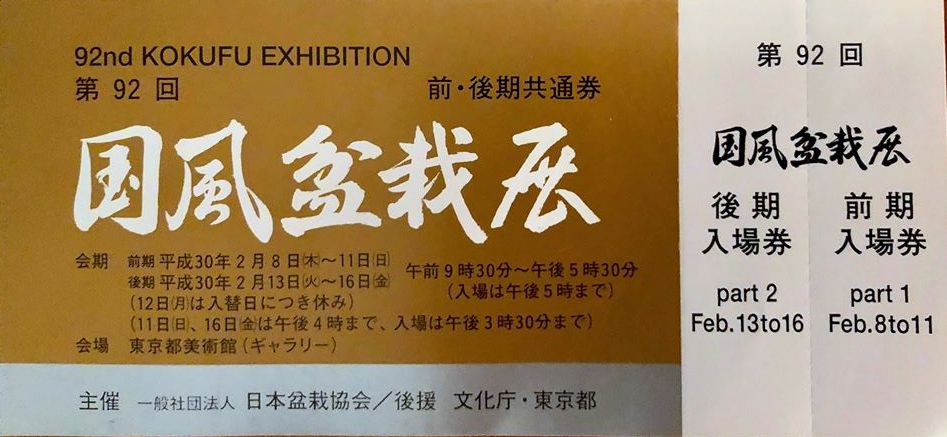
|
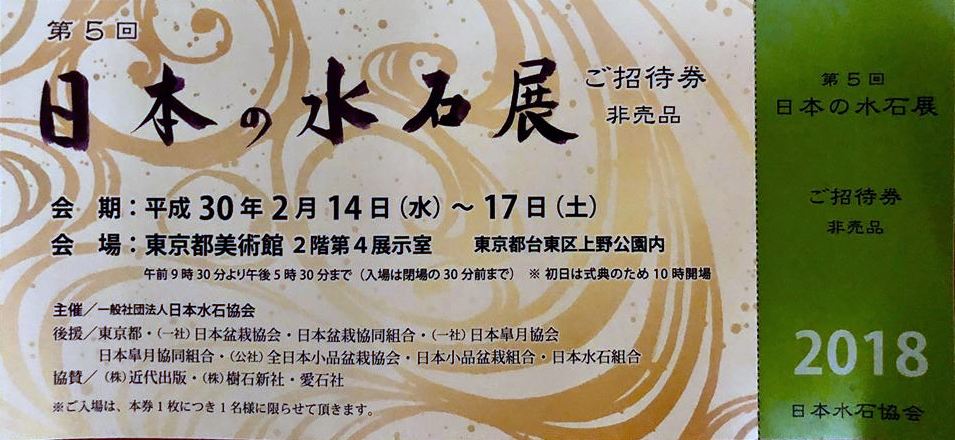
|
| 2018, No. 92 Admission Ticket |
2018, 5th Nippon Suiseki Exhibition Admission Ticket |
|
On the northwest shore of
Lake Shinobazu in Ueno Park is the Bai ten.
This is the bonsai sales area set up to accommodate bonsai shoppers visiting the Kokufu Ten. Bai ten is a
mostly uncovered lot that is centered around a three-story building called the "Green Club." This
Ueno Green Club
is where bonsai vendors, nursery owners, and potters from all over Japan of every stripe set up stalls selling
their wares. Perhaps four dozen vendors are inside the building there and another five dozen are
outside. As vendors pay a little more for exhibit space inside the Green Club, it is typically filled
with higher-quality wares. Bai ten is one of the highlights of a bonsai tour to Japan. Not only are
there hundreds of great trees, pots, tools and other bonsai paraphernalia on site, but they are all for
sale. A 10-minute free shuttle bus trip from the Museum runs continuously throughout the day to the
"club" area. Sometimes an
auction is also held. (The Tokyo Green Club in Ueno often has shows here on weekends throughout the
year, with trees, pots, tools, books, and magazines for sale.) As former assistant curator of the U.S. National Bonsai & Penjing Museum Aarin Packard observed in a mid-May 2014 entry in his blog: "For the top bonsai professionals in Japan the Green Club during Kokufu is very important to their livelihood. Selling trees and attracting clients is how these men feed their families. First and foremost it's about sales. The Kokufu-ten draws people from all over the world, many of whom are coming to shop for bonsai at the Green Club. This influences which trees are brought to sale. "You can think of each professional as a fisherman using his best lure to catch the biggest fish. Currently the biggest fish come from China, the recent growth of the Chinese economy has brought an appetite for high-end trees and pots. Therefore the lures used appeal to these fish the most, and the most appealing lures are big [physically and in the range equivalent to several tens of thousands of US dollars]. As I walked around on the first floor I noticed that each pro had at least one massive tree for sale. "Another major component is the Green Club provides an opportunity for each nursery to show off their stuff. I heard on several occasions that the trees in the Green Club would be better that those in the exhibit. In many instances this was true. Sale trees consisted of historic bonsai, previous Kokufu winners, famous trees recently restyled, and bonsai previously unknown in the community. The point is to let everyone else know that you still have the skills to pay the bills. After all, the green in Green Club doesn't just refer to the color of the trees. "The quantity and quality of the trees at the Green Club was unlike anything I have ever seen in one location. As you can see there were not only big expensive trees but material at every stage of development. The more I walked around the more I was struck by the size of the bonsai industry in Japan and the number of businesses it supported." Risshun Bonsai Oichi (literally, Lichun Bonsai Grand Market) is held at the Ueno Green Club. It is one of the Japanese largest markets of bonsai, pots, tools, suiseki (viewing stone) and related materials. It is virtually a sales area of Kokufu Ten because no commercial activities are allowed in the Tokyo Metropolitan Art Museum where Kokufu Ten is held. (And nobody says Risshun Bonsai Oichi -- Kokufu no baiten (sales area of Kokufu) will do.) It takes about 20 minutes to go from the Museum to Ueno Green Club on foot if you are familiar with the Ueno area. For the convenience of the visitors, every year during the Kokufu Ten period, a connecting limo (or minibus) runs between the Museum and Ueno Green Club. To some, the market is far more interesting and exciting than Kokufu Ten itself because everything is offered with a price tag. Actually some trees go back and forth between the Ueno Green Club and Kokufu Ten. The Ueno Green Club is also where all the trees entered for the Kokufu Ten are brought about two weeks before the exhibit for judging. Only the top trees are selected by the thirteen show judges, each of whom has a list of all the entrees. This way the judges know that if there are, for example, perhaps twenty ume (Prunus mume, Japanese flowering plum) entered, they will be very critical on how each tree is evaluated, in contrast to a situation where if only a single pomegranate is entered, the judges might perhaps then make a few allowances so that a well-represented exhibit results. After the selection process is completed, the trees are then taken away and returned a few days before the show at the Museum. Only professional bonsai artists may bring the trees, like "tree handlers." It costs the tree's owner the equivalent of about $200 to have a single tree pre-judged. If the tree is actually selected for the show, about another $600 fee is required for its entry in the Kokufu Ten about three weeks after the judging. (See also this recent video by Bjorn Bjorholm about "Kokufu Bonsai Preparation." American-born, he was an apprentice at Kouka-en for six years, followed by three years as artist-in-residence at the same location, making him the first and only foreign-born working bonsai professional in Japan. During his time in Japan, Bjorn's works were featured in the Kokufu-ten, Sakufu-ten, and Taikan-ten exhibitions, among many others.) Each professional artist is allocated a certain section in the show to display each of his customers' trees. Mr. Morimae, for example in 2006, had seven trees accepted. Once he got to the Museum he saw the seven areas next to each other, and proceeded to set up his customers' trees there. Setting up the show is a communal effort, so after one's trees are unloaded and set up (with a little help from friends), the next few hours are spent helping other nurseries, for instance, complete their displays. The companion plants and suiseki are usually supplied by the handler of the trees, not usually the owners. You see, as an individual you cannot display a tree. It must go through a handler who brings the tree in for judging in January and cares for the tree. Sometimes the display tables and pots are rented to the owner for display, sometimes sold. Artists look for eye movement direction and tree species in arranging the trees. Usually an evergreen is positioned next to a deciduous or broadleaf tree. After each artist finished placing his customer's trees, Mr. Hiroshi Takeyama (b. 1941), the third and current chairman of the NBA (since 2003), makes small adjustments. All the positions are numbered from 1 to about 265 (or whatever). After the final positioning was done, the show guide was completed because nobody knew the exact location of the trees until the last minute. The printer then produced the guide overnight. The NBA publishes a high-quality catalog or photo book afterwards to commemorate each show (see below photos). Each album comes packaged in a slipcase box, the cover of which has a different photo than the album cover itself. Usually the trees are photographed at night during the show. Several stages are set up and each tree is brought there for photos. For a double-show year, like 2014 or 2006, the show is closed for a day as the first round of trees is switched out, the second group is brought in, arranged, and a second show guide is finalized and printed. The show then resumes. The bonsai are displayed by the owner's name, not the artist who created them. Unlike in the West, the bonsai is the main object of the award, NOT the artist or the award. Remember that many artists are necessary to create masterpieces. The artist(s) is not mentioned in the commemorative album (see below), but often is if a magazine writes about the history of the tree. The award goes with the tree, and everyone knows which tree received the award. The actual award plaque is interesting, but not that important -- the honor is. Usually the last person who handled the bonsai receives all the accolades and the people who risked their lives to collect the trees, the people who cared for it and established it, and others who may have done some preliminary training do not. It is very rare that a bonsai masterpiece has only one artist. Only the last person who does something to the tree becomes "famous." Probably the master artists Masahiko Kimura, Kunio Kobayashi and Toshinori Suzuki have created the most Kokufu sho award bonsai masterpieces. "Mansei-en [bonsai nursery won] twice this year [2019] too with our maple in the first half and magnolia in the second, and also multiple times in the past. But remember these trees are owned by non-professionals. So the same owner cannot win two in one year." (Adam Jones response to Jeffrey Robson's question "if anyone has one two in one show before?" posted on Tyler Sherrod's FaceBook page Feb. 13, 2019) (In Japan, the professional bonsai artists have their own exhibition -- Nippon Bonsai Sakufu Ten (Japan Bonsai Creator's Exhibition). In early December (previously early January), their bonsai are displayed with the latest artist's name, not that of the owner. It is very common to have one bonsai displayed in the Sakufu Ten and then have it displayed in the Kokufu Ten with different names only a month or two apart. The Japanese have their bonsai on display to show the beauty of these wonderful trees. Of course most of the Japanese artists know who "created" the masterpiece, but it is the tree that gets the award. For the Sakufu Ten where the exhibition books are sold in December at the show, the trees are actually judged and photographed the previous October.) Master designer and artist Masahiko Kimura (b. 1940) worked on 50 of the 265 trees entered into the second half of the 2006 Kokufu Ten. The shimpaku juniper from the first half which was awarded a Kokufu prize had also been designed and displayed by Kimura for a client. (Kimura worked on 70 to 80 trees of the 2011 show, both deciduous and evergreen specimens.) There were two foreign American exhibitors in 2013:
The first American to ever have an entry selected for inclusion in the show was Doug Paul from Kennett Square, PA. His Japanese hemlock (Tsuga diversifolia) was being shown at the 2010 exhibition (see about a third of the way down and on the righthand side of the photo page). Doug was on the NBF Board of Directors. (This hemlock bonsai was purchased by Doug in Japan from Isao Omachi and was going through the lengthy two year post-entry quarantine period before it arrived to The Kennett Collection. Doug's Juniper that was in the Kokufu Ten in 2011 was lost forever to the sea during the Great Tsunami. The good news is that the amazing Hemlock was safe in the USA during quarantine.)
Constantino Franchi of Italy had a Ficus titled "Made in Tuscany" in the 71st Kokufu Ten in 1997. That tree was subsequently adopted by Kunio Kobayashi for his collection. A California juniper (Juniperus californica) designed by American Ernie Kuo was donated to Prime Minister Obuchi and was displayed at the 74th Kokufu Ten in 2000. (This juniper had not faired well in the Tokyo area and was said to be nearly dead in a large wooden box at the Kato garden.) Polish artist Mario Komsta, an apprentice of teacher Nobuichi Urushibata in Shizuoka for a few years, was a recent exhibitor. Mario had a Japanese red pine (Pinus densiflora) selected for the 80th Kokufu Ten in 2006. (That tree was styled for himself not for a customer [as was previously reported here]. As of September 2012, Mario still had this tree with him in Spain, and the previous year it was at the Noelanders Trophy competition in Europe.) And a number of other non-Japanese have assisted during their apprenticeships to Japanese bonsai masters in preparing trees for other showings. Many of the famous "Japanese" bonsai (Chinese quince, Korean Hornbeam, Pomegranate) often displayed in Kokufu Ten were originally imported from Korea, China, Taiwan, etc., either as field-grown or, less commonly, collected stock. The Beginnings Beginning in 1927 and running until 1933, the Meiji-Taisho Memorial National Bonsai Exhibition of Notable Trees (see Oct Also) was sponsored by Bonsai magazine and the Asahi Newspaper Company. The show was held at the newly constructed Asahi Newspaper Hall in Yurakucho in central Tokyo, less than 1.5 km southeast of the Imperial Palace. Author, editor and publisher Norio (Toshio) Kobayashi (1889-1972, see Apr 1) organized this show. From 1928 through 1933, the All-Japan Bonsai Exhibition (Zen Nihon Bonsai Ten) was held annually in Hibiya Park in Tokyo. This was the first purely Western-style park (created in the center of the capital city in 1903) and less than 1.5 km south of the Imperial Palace. (See Nov 1). The Tokyo government and All Nippon Bonsai Association sponsored the event. Each of these displays was commemorated with an illustrated show album of perhaps 80 pages in length. On May 1, 1926, the Tokyo Prefectural Art Museum was opened as the first public art museum in Japan. This was also symbolic of Tokyo's reconstruction after the devastation of the 1923 Great Kanto Earthquake. The Museum has been very popular among citizens as a venue for public exhibitions by nationally and internationally renowned fine arts organizations. About 6 km northeast of the Imperial Palace, the original Museum venue was a grand building with lots of front steps outdoors. Inside there were two curved staircases leading down to the ground floor to one huge open room with a transparent roof which was great for allowing natural light. Beginning in 1934, the Kokufu Ten succeeded the Hibya Park and Yurakucho exhibits and it is now the oldest continuous -- except during World War II -- public exhibit in Japan. Kobayashi was the driving force behind the establishment of the Kokufu Bonsai Society and the Kokufu Ten exhibition. In 1931 he had applied to hold an exhibition in the Tokyo Prefectural Art Museum. However, the directors of the museum questioned the artistic nature of bonsai and opposed bringing soil into the Museum. It was not going to be easy to hold a bonsai exhibition in the "Art Sanctuary." A helping hand in securing permission came from modern sculptor Fumio Asakura, who was one of the directors of the Museum. He and Kobayashi led the efforts at promoting the concept of exhibitions of bonsai at art museums, dubbed "Bonsai Art Campaigning." The President of the House of Peers and miniature bonsai enthusiast, Count Yorinaga (Raiju) Matsudaira (1874-1944, see Sep 13), also helped organize the Kokufu Ten and was the society's first president. The name "Kokufu" is an amalgamation of the Chinese characters representing "country" and "air" or "spirit". The name, according to Kobayashi, points to the fact that "bonsai is an artform particular to Japan that represents its spirit as a nation." Each contributor was only allowed one submission. Still, there were ninety-six trees in that initial exhibition, and a compromise was the main reason soil needed to be 100% covered in green moss. This was the first recorded incident of bonsai being exhibited in an art museum. All of the bonsai were displayed in the one huge open room with natural lighting. This was desirable for maintaining both evergreen and deciduous trees indoors for about a week. Trees must be kept at appropriate temperatures and humidity levels for health reasons when displayed indoors. Before the Pacific War, the event was held twice in the spring and autumn, based on the advice of sculptor Asakura who said, "Bonsai is a place to enjoy the seasons, and it is preferable to hold it in the spring and autumn." In October 1943, Tokyo Metropolis was formed by the merger of Tokyo Prefecture and the city of Tokyo. The Art Museum's name was changed to Tokyo Metropolitan Art Museum. Because of a rapid increase in the number of bonsai enthusiasts in Japan in the early 1960s, the need to transform the private Kokufu Bonsai Society into a nationwide public organization became obvious. In February 1965 the Kokufu Bonsai Society was dissolved and reorganized to become the parent body of the Nippon Bonsai Association. Shigeru Yoshida (1878-1967), the former diplomat to London who had been the first prime minister in post-war Japan until 1954, was its first president. The NBA assumed the role of organizer of the annual Kokufu Bonsai Exhibitions. Discovered to be deteriorating in the later 1960s and seismically unsafe, the Metropolitan Art Museum was then replaced in 1975 with a new building constructed next door. The original site, cramped for space and with a poor viewing environment, was then demolished and the remaining area repurposed as a garden. The NBA in the 1990s had more than 300 chapters nationwide with approximately 20,000 members and some 300 other members in 30 countries throughout the world. In April 2012, the Metropolitan Art Museum held its Grand Reopening after two years of renovation work. In February 2016 there was some 7,000 members in the NBA, per top notes to 90th Kokufuten video, akio ohara Channel. By the 2020s there were perhaps only some 5,000 members in the Nippon Bonsai Association (per Kimura-Kobayashi conversation, Part II, WABI Channel, 13:30 mark). The NBA headquarters is located at 8-1, Ikenohata 2 chome, Taito-ku, Tokyo 110-0008 Japan, not too far west of the Ueno Green Club.
(Initial material from
"The
Best Bonsai and Suiseki Exhibits in Japan" by Thomas S. Elias, originally on pg. 12 (of pp. 10-14 article)
of the May/June 2002 issue of Bonsai Clubs International's Bonsai Magazine); with some additional material
from Morita, Kazuya and NBA Editorial Staff "Bonsai in Japan," in Tsukiyama, Ted T. (ed.)
Bonsai of the World, Book I (Japan: World Bonsai Friendship Federation, 1993), pp. 89-90; Kobayashi, Norio
Bonsai -- Miniature Potted Trees (Tokyo: Japan Travel Bureau, Inc.; 1951, 1962, 1966), pg. 167;
Bonsai Tonight's article "Green Club", and
"The
Kokufu Gamble" by Cheryl Manning, a revised and expanded version of an article that originally appeared in
Golden Statements magazine; plus substantial material from personal e-mails to RJB from William N.
Valavanis, especially while the latter was in Tokyo during the 2006 show. Exhibition re-location per
e-mail from WNV 7 Jan 2010, and Sakufu Ten move from January to December per WNV 30 Nov 2011. And
material from the discussion thread,
http://web.archive.org/web/20100212152743/http://ibonsaiclub.forumotion.com/announcements-f5/american-s-bonsai-display-at-kokufu-bonsai-ten-exhibition-t2266.htm.
Quote from 2011 from WNV posting to Internet Bonsai Forum, 15 Feb 2011,
http://ibonsaiclub.forumotion.com/t5641-2011-85th-kokufu-bonsai-exhibition.
E-mail communication between RJB and Mario Komsta on Facebook, Sept. 22-23, 2012. 2013 ticket from Facebook posting by Isao Omachi,
Japan, 27 Jan 2013. Info and photos for 2013 from 7 Feb
Internet Bonsai Club forum posting by WNV, with e-mails to RJB from WNV in response to several questions on 6 and 7 Feb 2013;
2014 photos and information per WNV's blog;
"Back
on His Feet -- Isao Omachi Four Years Later," Bonsaibark blog, 04/27/15; Giovanni Americano's 2025 award winning Trident maple
can be seen here.
Some 2025 stats from Nippon Bonsai Association
FB posts, Feb. 8,
11, and 12. Three 2025 Part 2 photos from Tony Bebb's
FB posts Feb. 13,
2025. Kokufu 90 Part I photos by Larry Ragle. 2018 photos and information per
WNV blog, Part 1a,
WNV blog, Part 1b,
WNV blog, Part 2a, and
WNV blog, 5th Suiseki.
2019 information per WNV
blog, Part 1a and WNV
blog Part 2a. 2020 information per
WNV blog, Part 1,
Part 3,
Part 4, and
WNV blog, 7th Suiseki.
WNV blog, Surprise Visit To
Omiya 2023,
2023 Part 1,
2023 Part 4, and
2023 10th Suiseki;
2024 Part 1,
2024 Part 2, and
2024 61st Suiseki
Exhibition -- Part 1;
2025 Part 1 and
2025 Part 2; and
2026 Part 1-1,
2026 Part 1-2, and
2026 Part 2-1.
Please do take a look at these blogs: there are many more photos of the other various
trees and viewing stones in them. 2026 show program, ballot and ticket from
02/10/26
Hiroyuki Suzuki Facebook post. Five 2026 Part 1 prize winners from
02/08/26 Tony Bebb Facebook post.
Yoshihiko Moriyama's and Chinese collector's Chinese junipers per
February 8, 2026 Bonsai Society of Portland by Jeff Robson
Facebook post Two 2026 Part 1 prize winners from
02/08/26
Pedro J. Morales Facebook post. Four 2026 Part 1 prize winners from
02/08/26
Massimo Bandera Facebook post of ShinShin Bonsai. Korean hornbeam identification from
02/11/26 Bonsai Society of Portland Facebook post by Jeffrey
Robson. Identification of Japanese Black Pine and first Chinese Quince, and Japanese White Pine pictures from
02/13/26 blog by Michael Hagedorn. NOTE: The year given on
the historic photos does not always match our listing: first picture, yes, show #1 in 1934; show #14 in 1939 we have as 1941, show #37
in 1962 we have as in 1963, and show #55 in 1980 we have as 1981; Shohin prize winner description from
02/08/26
Bonsái Pavía Facebook post. Identification of Shishigashira Japanese Maple from
02/15/26
Facebook post of Corin Tomlinson. Japanese maple at show #100 and 58 from
02/10/26
Facebook post of Bonsaï Club de la Sainte-Baume; Ten photos of Part 2 winners per Kinbon Bonsai per
February 14,
2026 Bonsai Society of Portland by Jeff Robson Facebook post; Additional Prize identifications from
"The 100th Kokufu Ten" by Walter Scott and William N. Valavanis, The Bonsai Review, Spring 2026, Issue 2,1, pp. 56-85.
VSANA News 2024, August 2023, "The Future of the Meihin-ten."
Imperial Household exhibits in 2020 and Mr. Suzuki per Makiko Koba's Facebook posts of 02/11/20.
"Tokyo Metropolitan Art Museum History."
2018 ticket images from WNV to RJB via Facebook Messenger Feb 15, 2018. "Birth of the Kokufu-ten Bonsai
Exhibition Series - Early Showa Bonsai Aiming for Art Museum Status," Omiya Bonsai Art Museum, Saitama, 2019
from "Greeting", from "Part 4 - Sculptor Fumio Asakura' Aid -- The eve of the Kokufu-ten", and notes for Figures
46 and 47. Fumio Asakura seasonal quote per Google translation of
http://bonsai-kyokai.or.jp/kokuhuten.htm accessed 08/30/20,
from Makiki Koba's Facebook post the day before. "Sales area of Kokufu Ten,"
(Feb. 4, 2013 and
Feb. 4, 2016).
Excerpts from "We Be Green Clubbin"
by Aarin Packard, May 15, 2014, Capital Bonsai, which has many photos. Bjorn Bjorholm bio excerpt from
his website, http://www.bjorvalabonsaistudio.com/bjorn_bjorholm/,
and this BonsaiEmpire article with photos by Bjorn,
https://www.bonsaiempire.com/blog/kokufu-ten.)
|